d'Eglantier
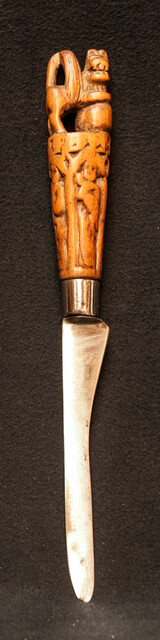
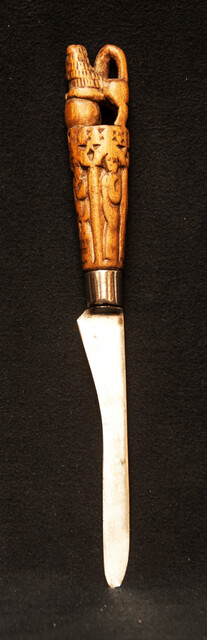
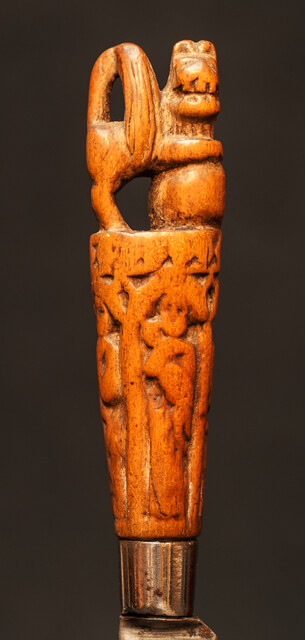
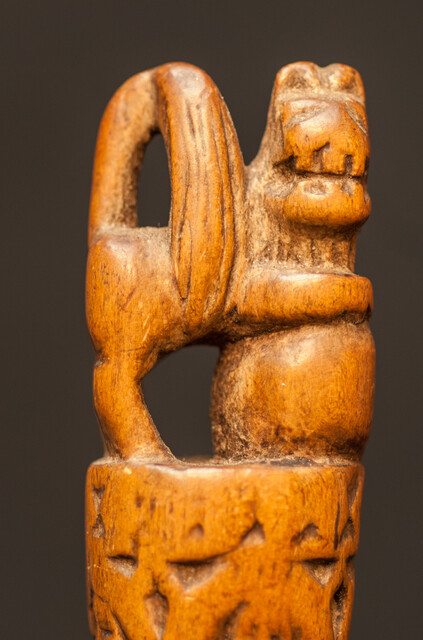
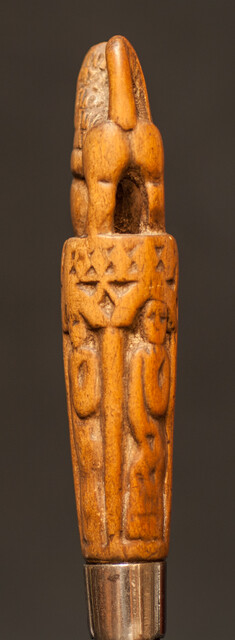
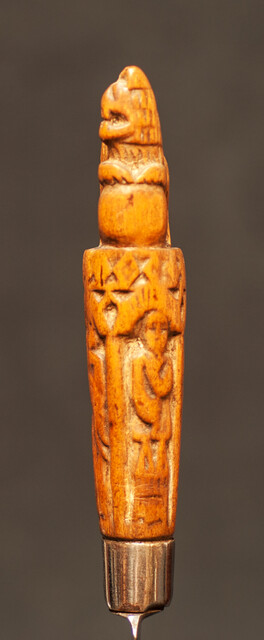
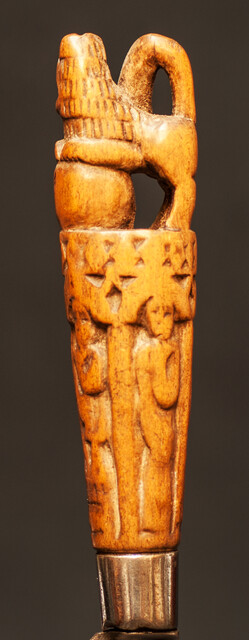
  • An eighteenth century knife from West-Friesland with a boxwood handle showing the coat of arms of Hoorn along with Hope,Love,Justice and Faith.
  • An eighteenth century knife from West-Friesland with a boxwood handle showing the coat of arms of Hoorn along with Hope,Love,Justice and Faith.
  • An eighteenth century knife from West-Friesland with a boxwood handle showing the coat of arms of Hoorn along with Hope,Love,Justice and Faith.
  • An eighteenth century knife from West-Friesland with a boxwood handle showing the coat of arms of Hoorn along with Hope,Love,Justice and Faith.
  • An eighteenth century knife from West-Friesland with a boxwood handle showing the coat of arms of Hoorn along with Hope,Love,Justice and Faith.
  • An eighteenth century knife from West-Friesland with a boxwood handle showing the coat of arms of Hoorn along with Hope,Love,Justice and Faith.
  • An eighteenth century knife from West-Friesland with a boxwood handle showing the coat of arms of Hoorn along with Hope,Love,Justice and Faith.
An eighteenth century knife from West-Friesland with a boxwood handle showing the coat of arms of Hoorn along with Hope,Love,Justice and Faith.

275 €


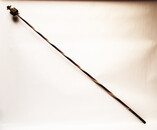
A knife. Overall length 23 cm. Length of handle 10 cm. The boxwood handle crowned by the symbol of the city of Hoorn, and decorated with Hope,Love,Faith and Justice. Very delicately executed on all sides. In good general condition with signs of use. No damages, repairs or restorations. West-Friesland, 18th C.  

Request for more information
See more items of this dealer
Print
d'Eglantier
Address:
Egelantiersgracht 93 ,
1015 RE Amsterdam
Country: The-Netherlands
Tel.: +31 (0)20 6262061
E-mail: info@deglantier.com
Website: www.deglantier.com
An eighteenth Century Dutch banner stick.

An eighteenth Century Dutch banner stick.


A banner stick. Length 205 cm. With an elaborately decorated  top with several funny figures laughing at you. Below a long stick with the Dutch tricolore red white and blue. This type of banner stick was often used by shooting companies, either with bow and arrows or with rifles. This stick is in mint condition with only a few minor signs of use. 
 

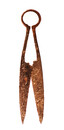
An early seventeenth century small animal shears.

An early seventeenth century small animal shears.


An iron shears. Overall length 14 cm. Wrought iron. Resembling a sheep shears, but considerably smaller. Most likely used for trimming a smaller animal like a dog. Found in a seventeenth century excavation site in the province of Zeeland. Still in good functioning condition with attractive patina and signs of influence of longstanding stay in a submerged environment. The small size is quite exceptional. Therefore an extremely rare item.
 

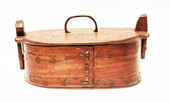
An eightteenth century scandinavian

An eightteenth century scandinavian "Butte".


A scandinavian "Butte". Long 28 cm. Wide 17 cm. High 10 cm. Patinated wood with typical scandinavian stamped decorations. On the lid the initials of the girl who owned the box : "D.H.S.". With a fitted handle. Mint condition. This type of butte was often used to store clothing. They were popular wedding gifts.
 

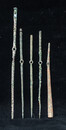
Five bronze Roman needles found in an excavation on the island of Cyprus. Second Century before Christ.

Five bronze Roman needles found in an excavation on the island of Cyprus. Second Century before Christ.


Five needles. Size between 12 and 16 cm. Bronze with beautiful green oxydation patina. The needles all five have a clear opening for the thread. The needles were found on Cyprus, a Roman colony around two centuries ante Christs birth. They are in a remarkably good condition. And extremely rare.
 

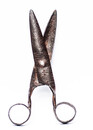
An early seventeenth century pair of scissors with blacksmiths touch mark signs.

An early seventeenth century pair of scissors with blacksmiths touch mark signs.


A pair of scissors. Overall length 15 cm. Obviously hand forged and on both sides a cross shaped blacksmiths touch mark. Mint condition. Holland early seventeenth century.
 

A crystal tot. Dutch. Around 1800. In mint condition.

A crystal tot. Dutch. Around 1800. In mint condition.


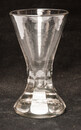
A crystal tot. High 13,5 cm. Upper diameter 8 cm. Diameter foot 7 cm. Weight 350 gram. With eight nicely carved and polished surfaces on the foot. Underneath an also polished pontil. In mint condition. Holland around 1800.
 

A small wooden Frisian buttercup.

A small wooden Frisian buttercup.


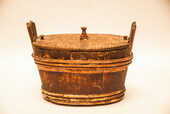
A buttercup. High 12 cm. Wide 12 cm. Made from cooped oak with willow bands. Painted in a red colour. Separate lid with two brass and one wooden peg. Inside also painted in a red colour. Nice patina. On several small feet in a darker kind of wood. In good condition with signs of use. Friesland around 1750.
 

An eighteenth century Dutch

An eighteenth century Dutch "sodaglass" in mint condition.


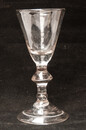
A glass. High 15 cm. Upper diameter 6,5 cm. Diameter foot 7 cm. Weight 140 gram. Sodaglass with several irregularities. Hollow foot with a folded rim and an early unpolished pontil. Mint condition Holland, around 1725.
 

A wooden painted Dutch decoy bird in the form of a coot.

A wooden painted Dutch decoy bird in the form of a coot.


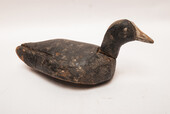
A decoy. Long 28 cm. High 12 cm. Wide 14 cm. On the underside two iron bars for the application of lead weights. The decoy was apparently meant not for catching ducks but for coots. A decoy coot is very unusual. The bird is in a good general condition with signs of extensive use. Dutch, nineteenth century.
 

A French 18th century

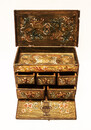
A French 18th century "Casquette d'Amour". with original painted decorations on all sides and 5 small drawers.


A painted box. High 19 cm. Wide 16 cm. Long 27 cm. Painted on inside and outside with flowers, birds and hearts. On four bun feet. With five small drawers. This type of decoration makes it likely that the origin of the box was in the South-East of France around 1700. The box and its paint are in mint condition. Similar boxes were often a wedding presents. Hence the name: "Love Box". In this condition these boxes are very rare.
 

An eighteenth century apothecary box with text

An eighteenth century apothecary box with text "ALUIN".


An apothecary box. Long 28 cm. Wide 16 cm. High 13 cm. With a sliding lid. On the front and side the text "ALUIN". Aluin is a Potassium Alum salt and is mainly used to stop bleeding, in particular during shaving with a sharp rasor. Often found in barber shops. The box is in mint condition. Holland, around 1750.
 

Three nineteenth century Dutch Cooped containers among which one for lapwing eggs and one for soap.

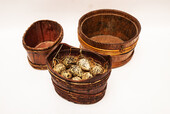
Three nineteenth century Dutch Cooped containers among which one for lapwing eggs and one for soap.


Three well cooped containers. High approximately 12 cm. Largest diameter 20 cm. One of them containing eight lapwings eggs. Another marked "ZEEP" (soap). All three in excellent condition. Low Countries around 1850.