Rob Schipper
  • prachtig 18de eeuws kabinet van Satijnhout
  • prachtig 18de eeuws kabinet van Satijnhout
  • prachtig 18de eeuws kabinet van Satijnhout
  • prachtig 18de eeuws kabinet van Satijnhout
  • prachtig 18de eeuws kabinet van Satijnhout
  • prachtig 18de eeuws kabinet van Satijnhout
  • prachtig 18de eeuws kabinet van Satijnhout
  • prachtig 18de eeuws kabinet van Satijnhout
  • prachtig 18de eeuws kabinet van Satijnhout
  • prachtig 18de eeuws kabinet van Satijnhout
  • prachtig 18de eeuws kabinet van Satijnhout
  • prachtig 18de eeuws kabinet van Satijnhout
  • prachtig 18de eeuws kabinet van Satijnhout
  • prachtig 18de eeuws kabinet van Satijnhout
  • prachtig 18de eeuws kabinet van Satijnhout
  • prachtig 18de eeuws kabinet van Satijnhout
  • prachtig 18de eeuws kabinet van Satijnhout
  • prachtig 18de eeuws kabinet van Satijnhout
  • prachtig 18de eeuws kabinet van Satijnhout
  • prachtig 18de eeuws kabinet van Satijnhout
  • prachtig 18de eeuws kabinet van Satijnhout
  • prachtig 18de eeuws kabinet van Satijnhout
  • prachtig 18de eeuws kabinet van Satijnhout
  • prachtig 18de eeuws kabinet van Satijnhout
prachtig 18de eeuws kabinet van Satijnhout

3500 €


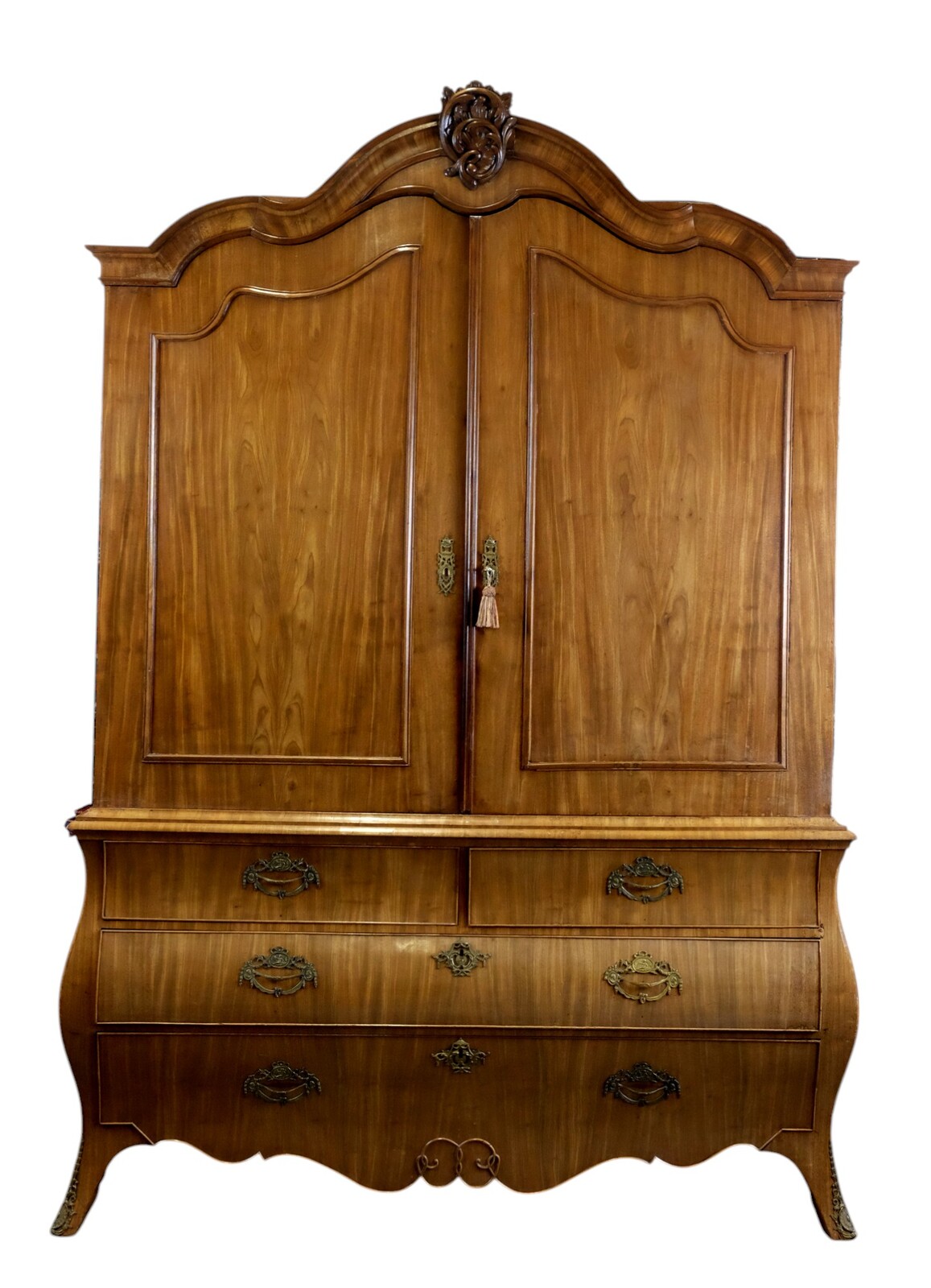
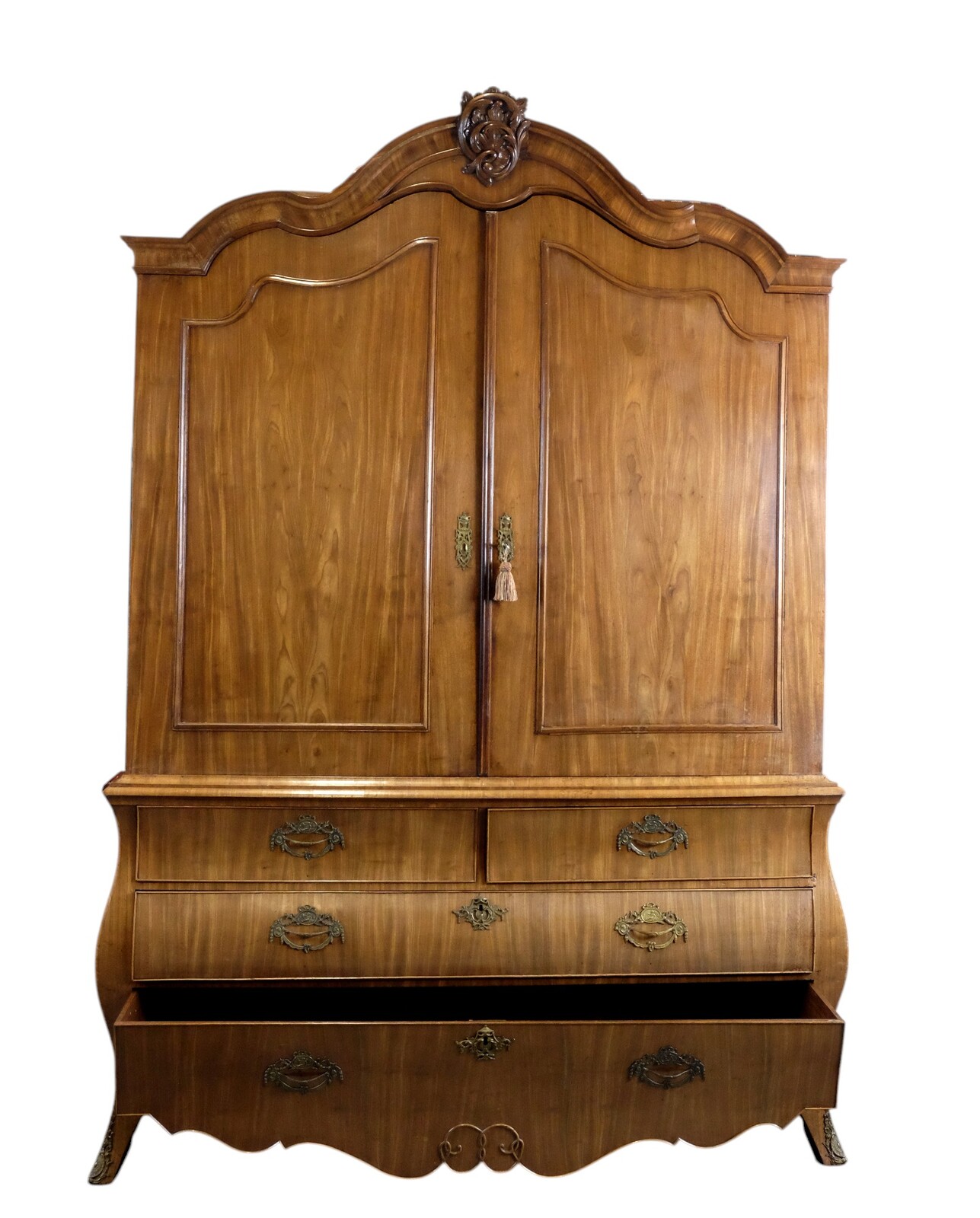
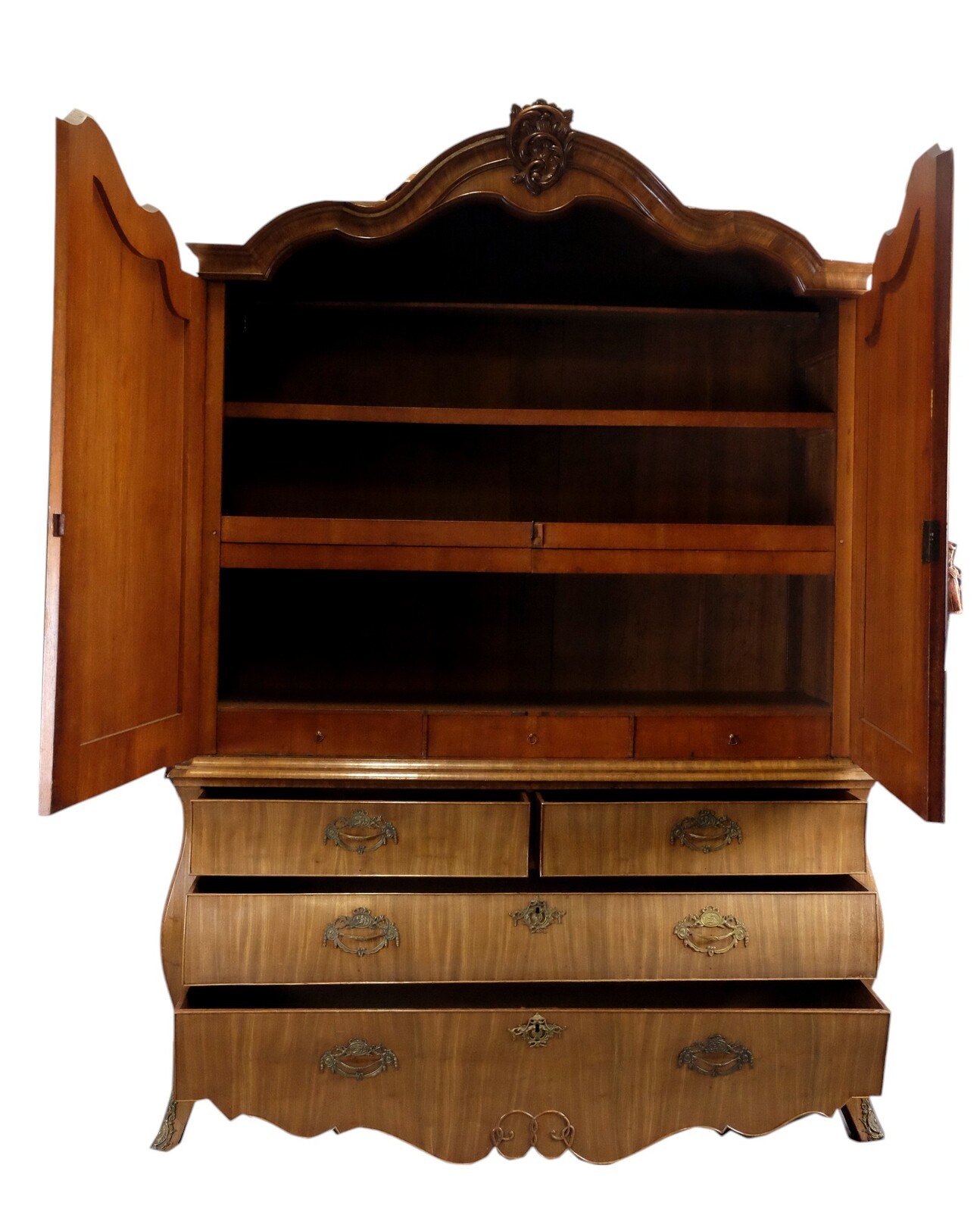
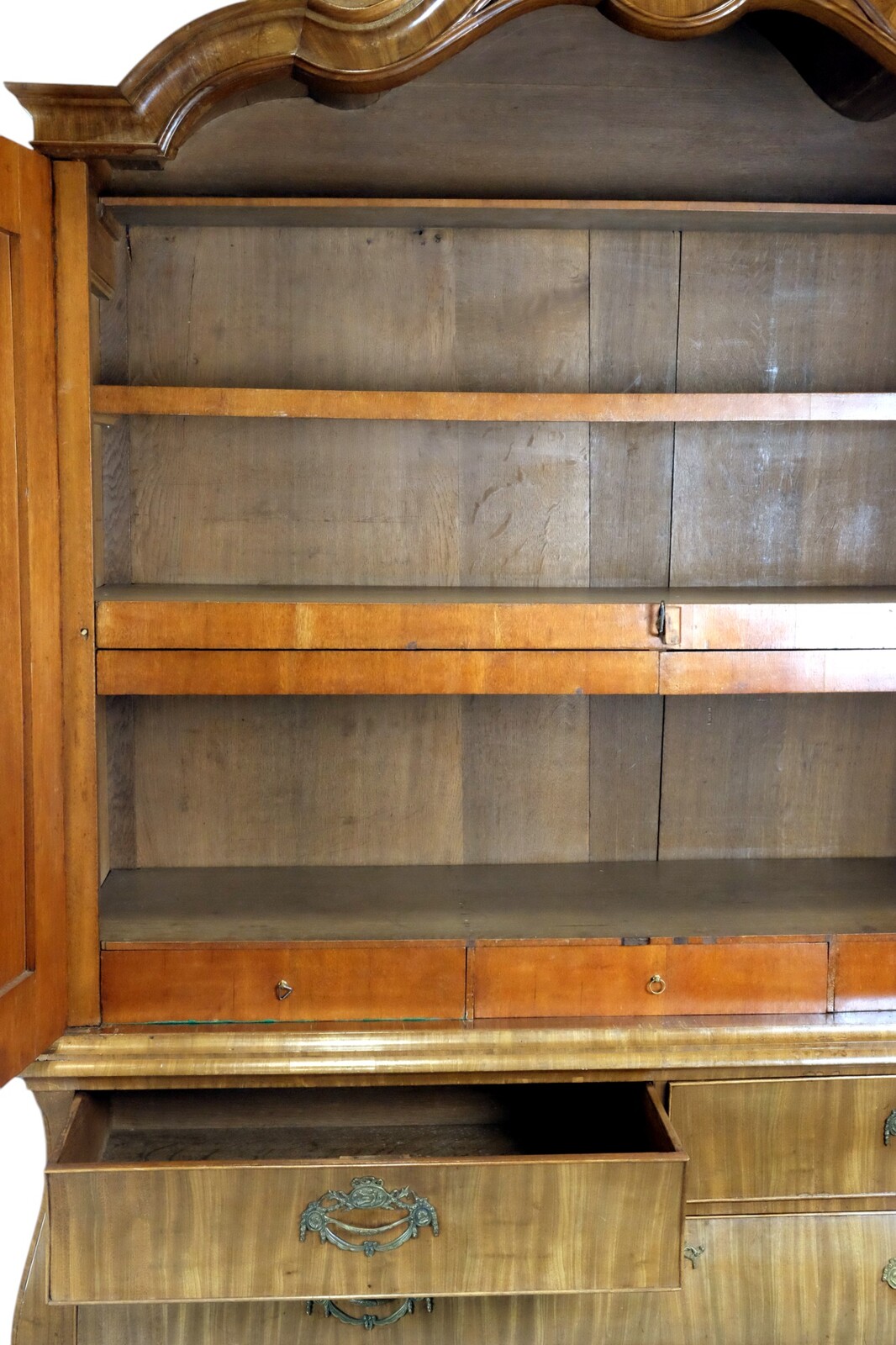
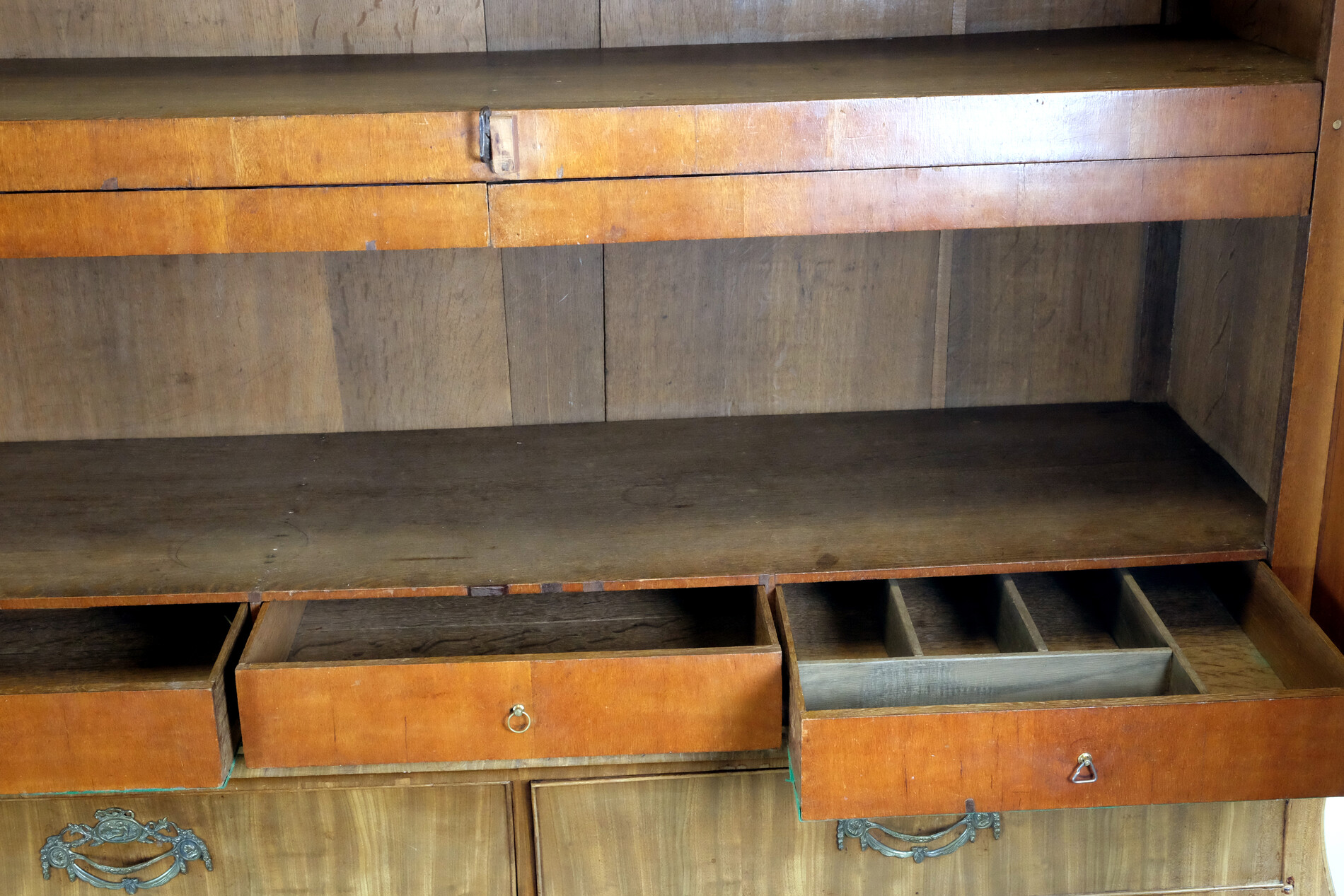
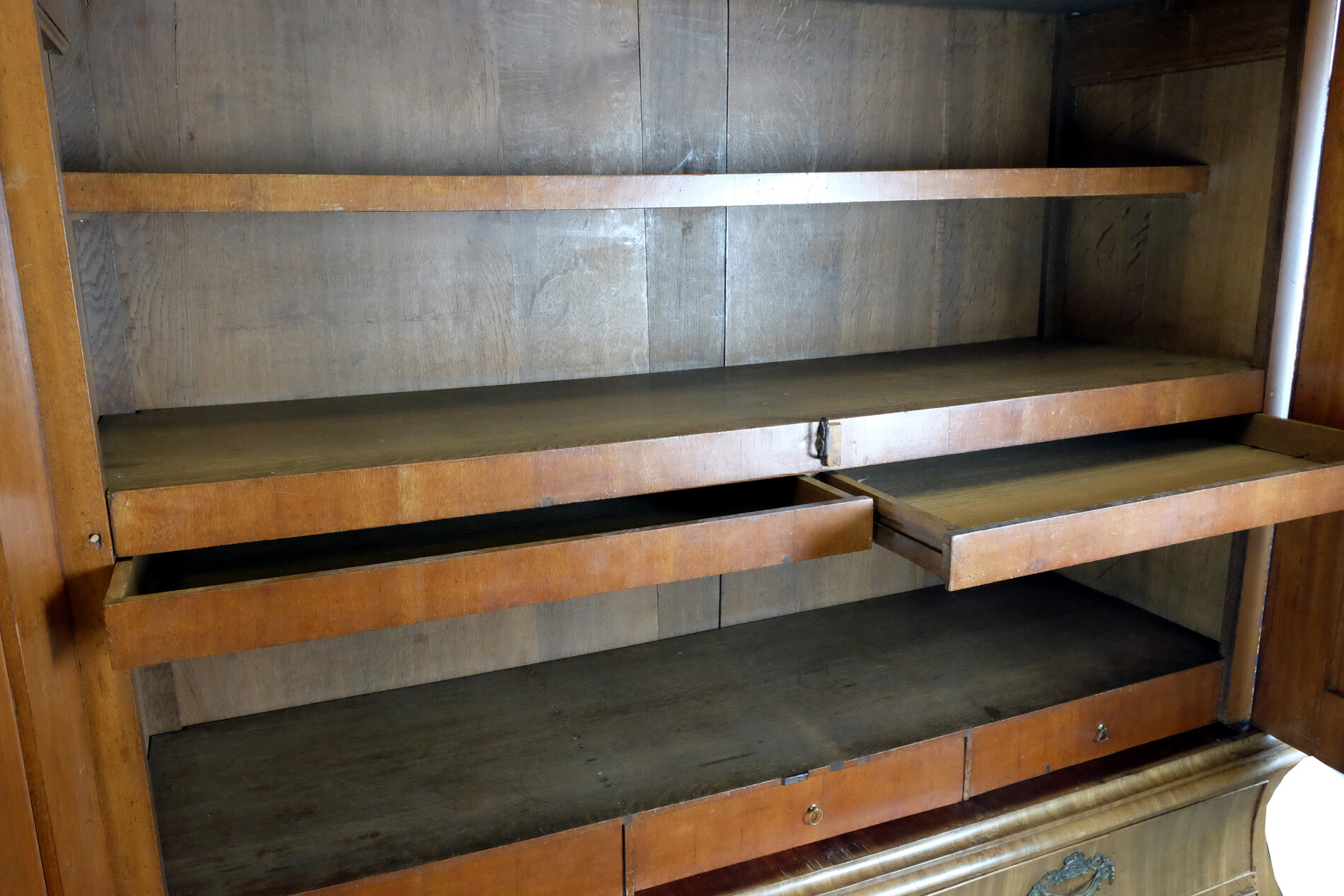
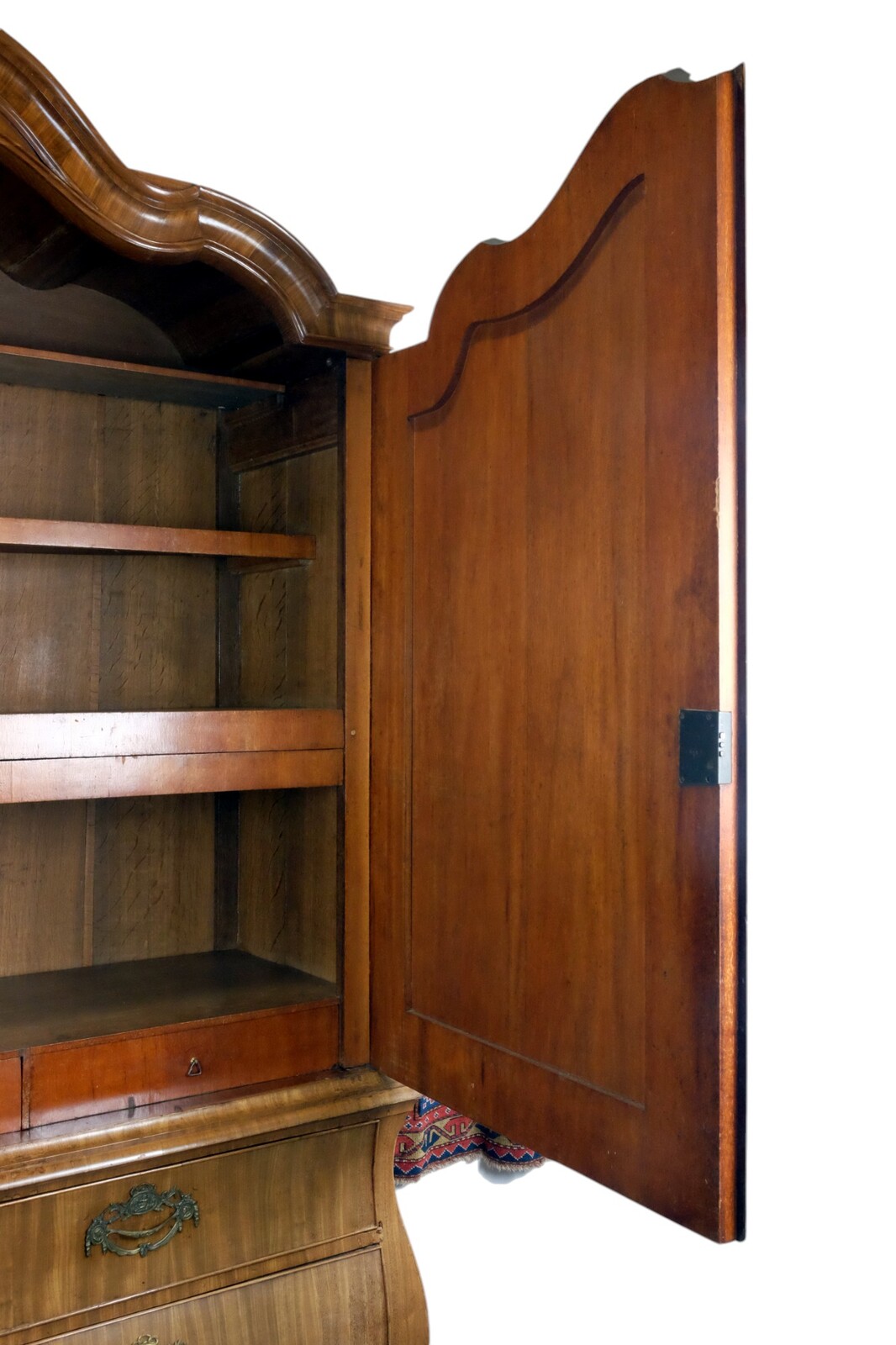
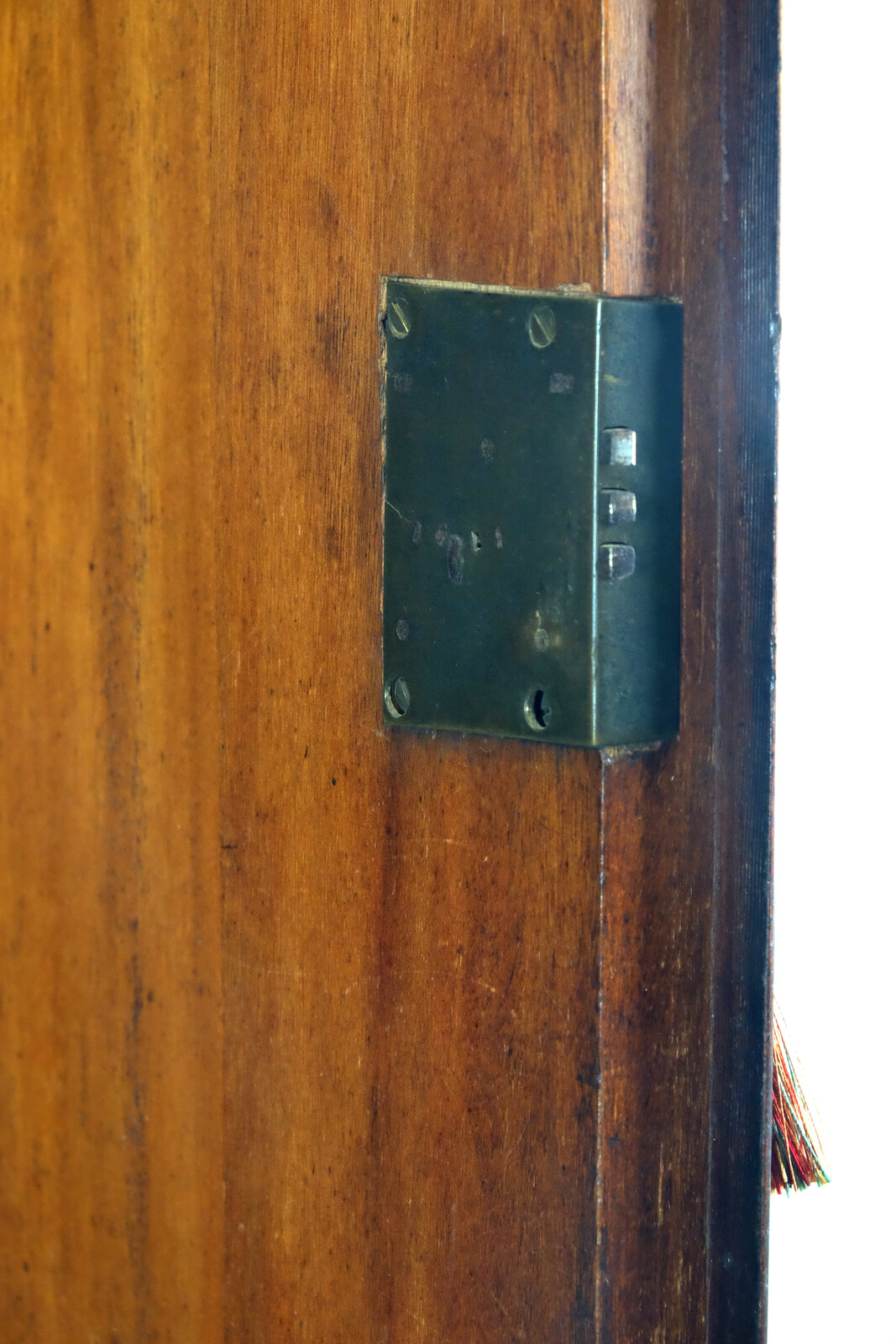
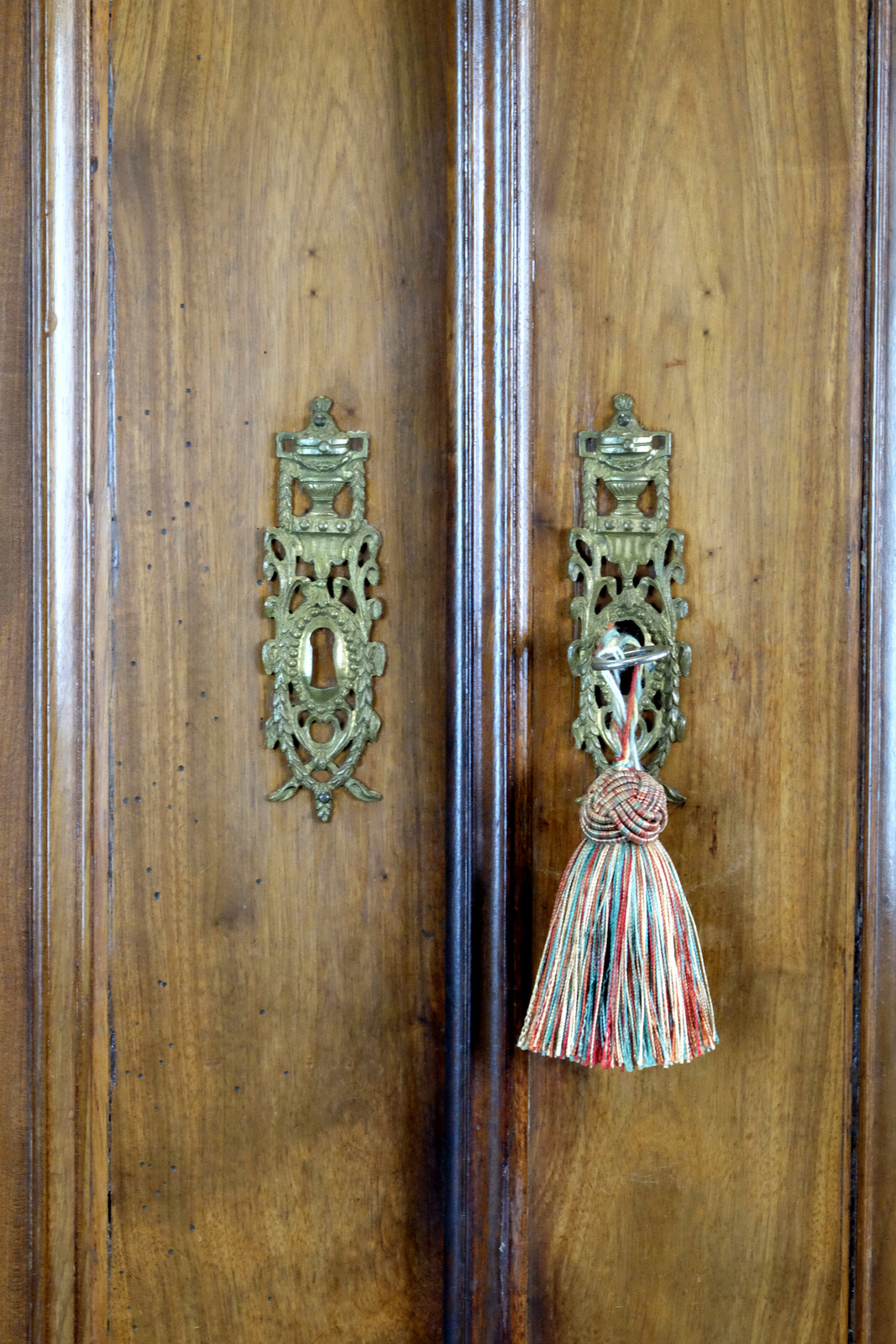
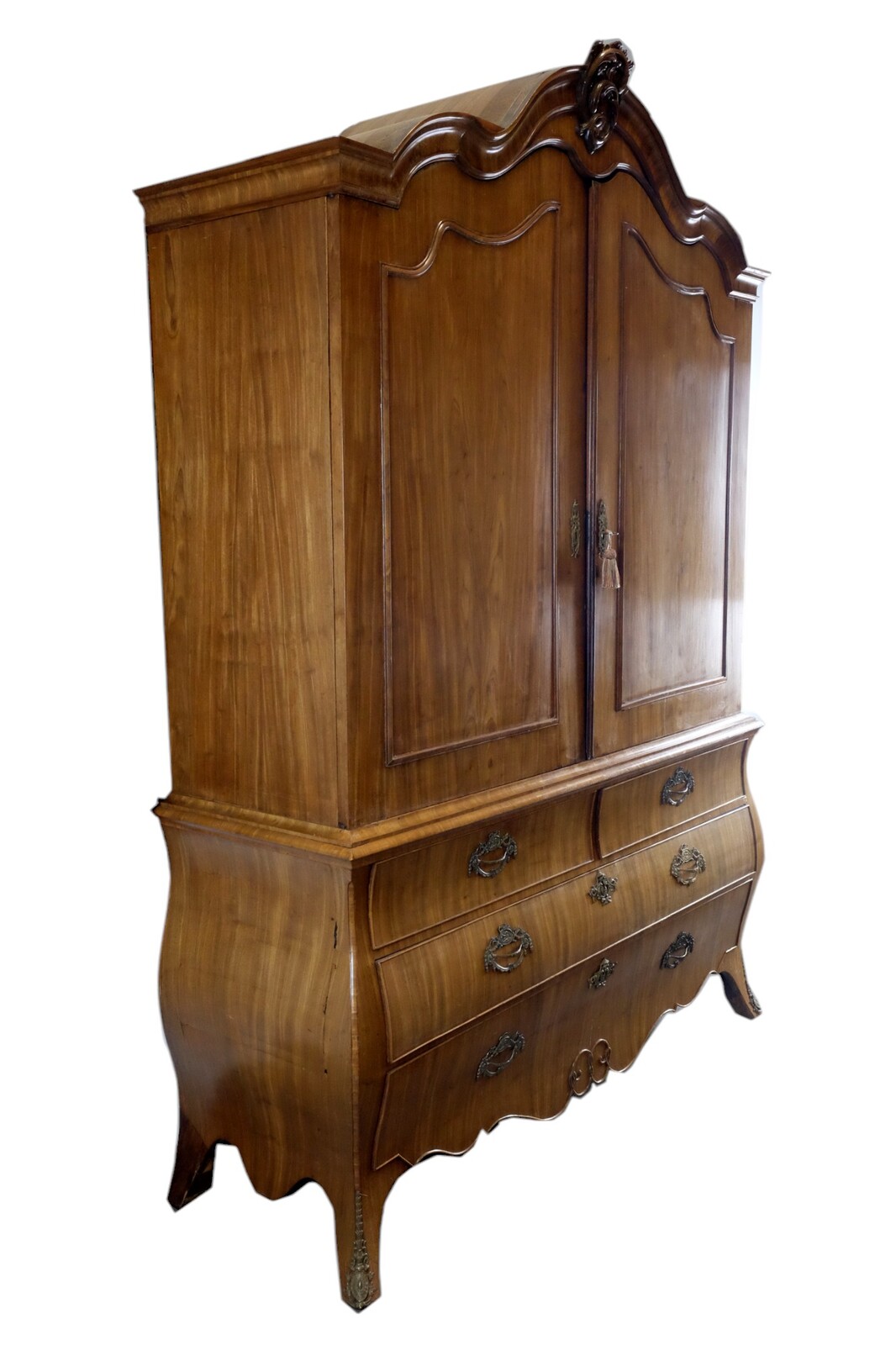
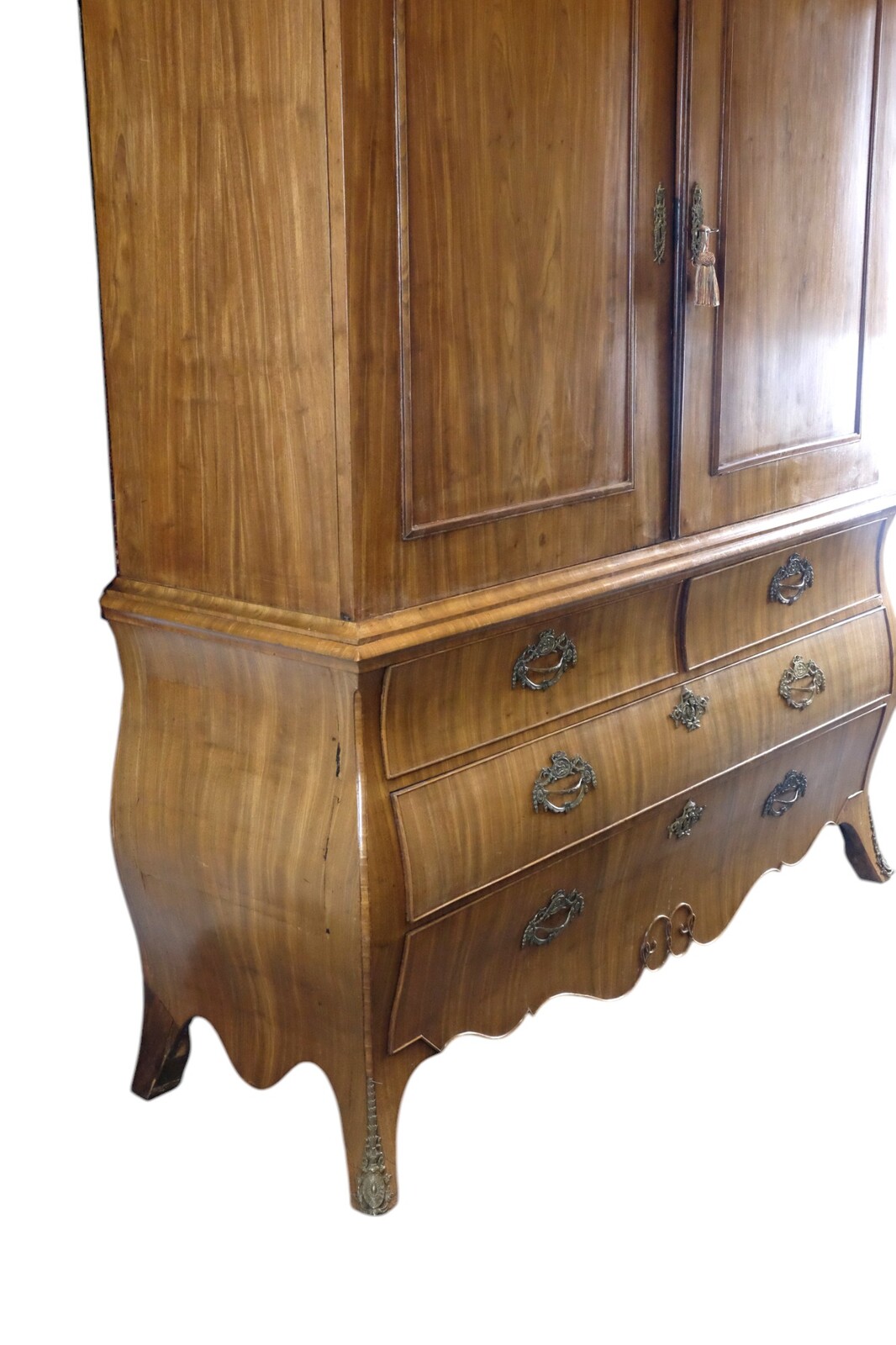
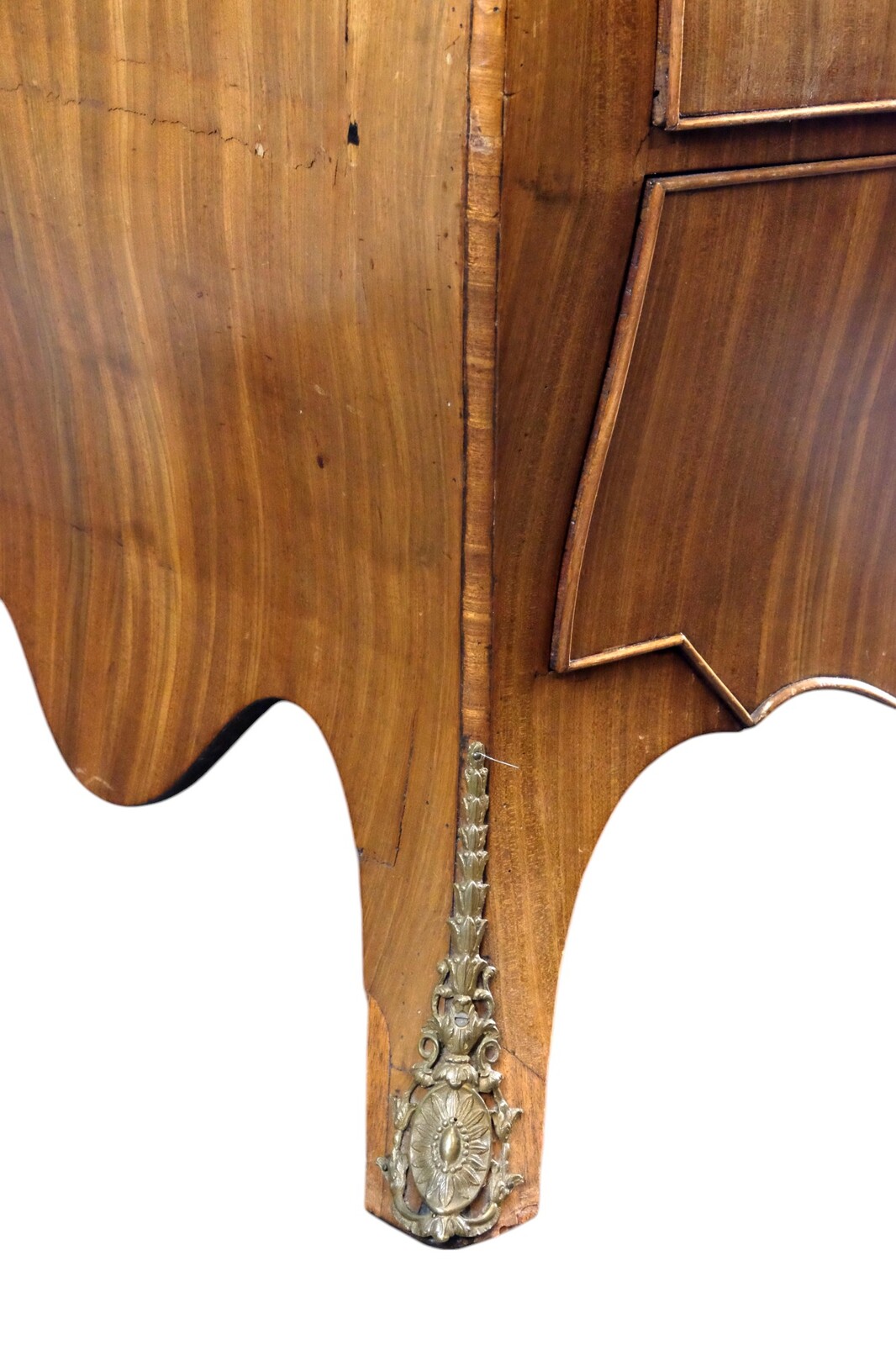
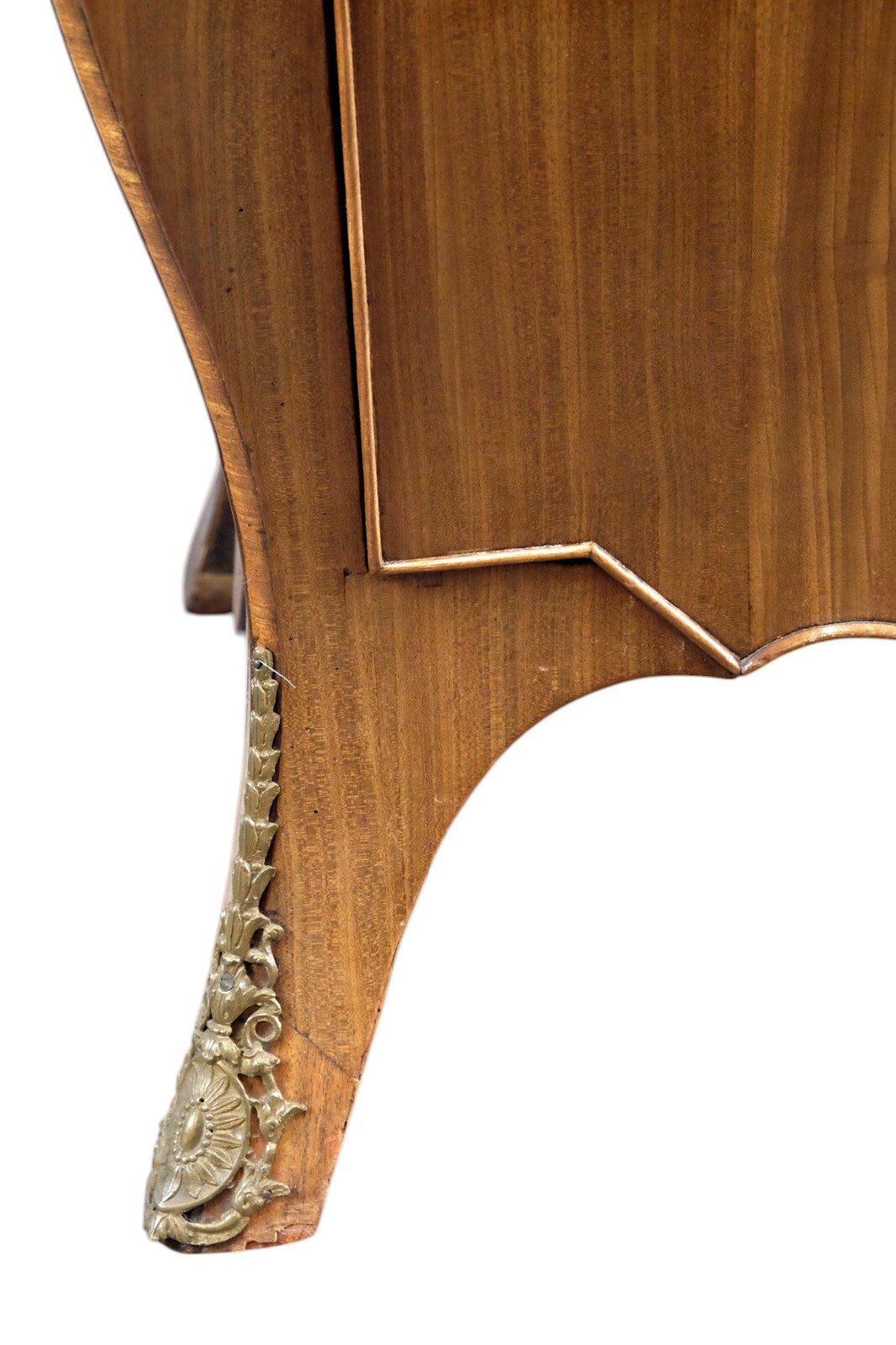
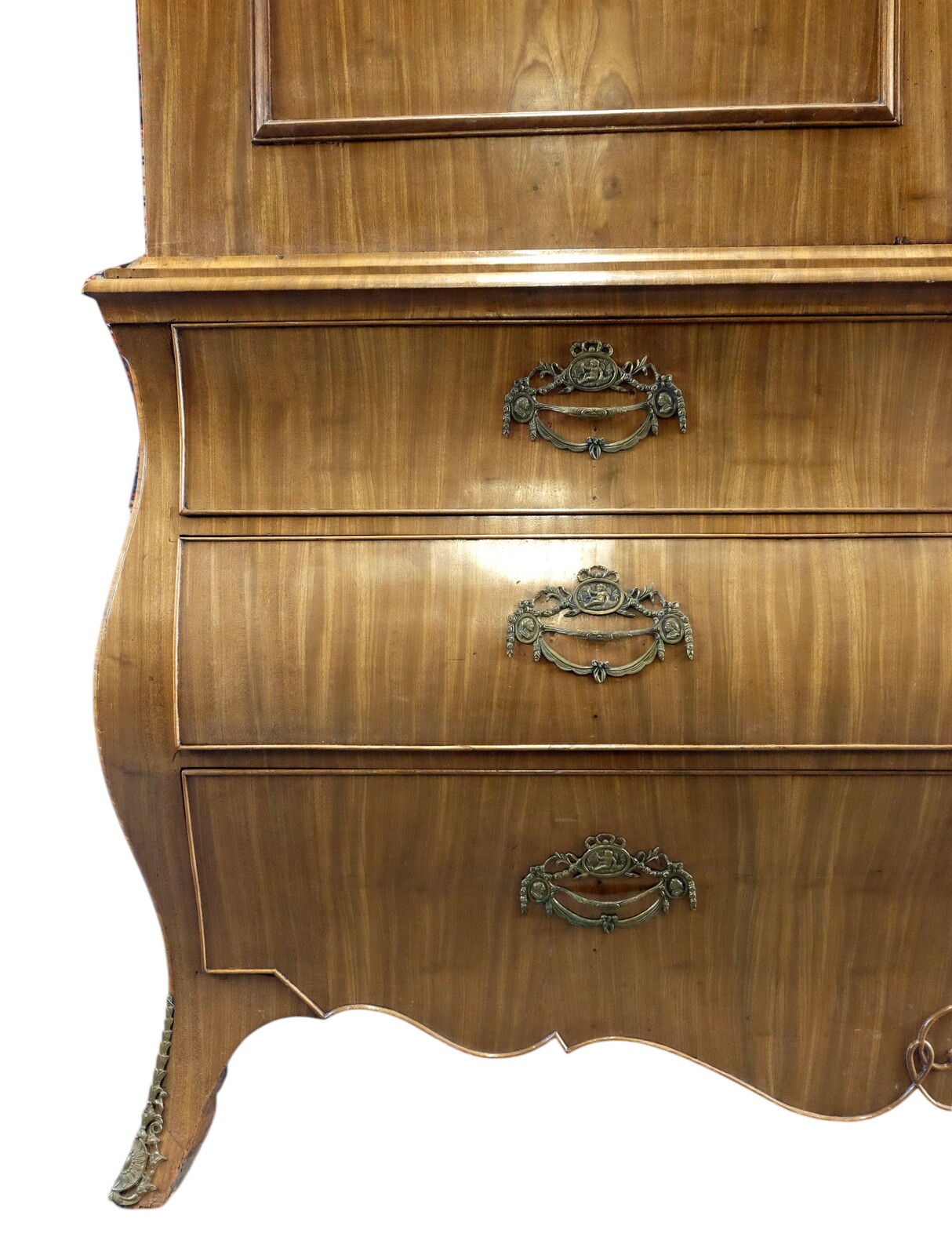
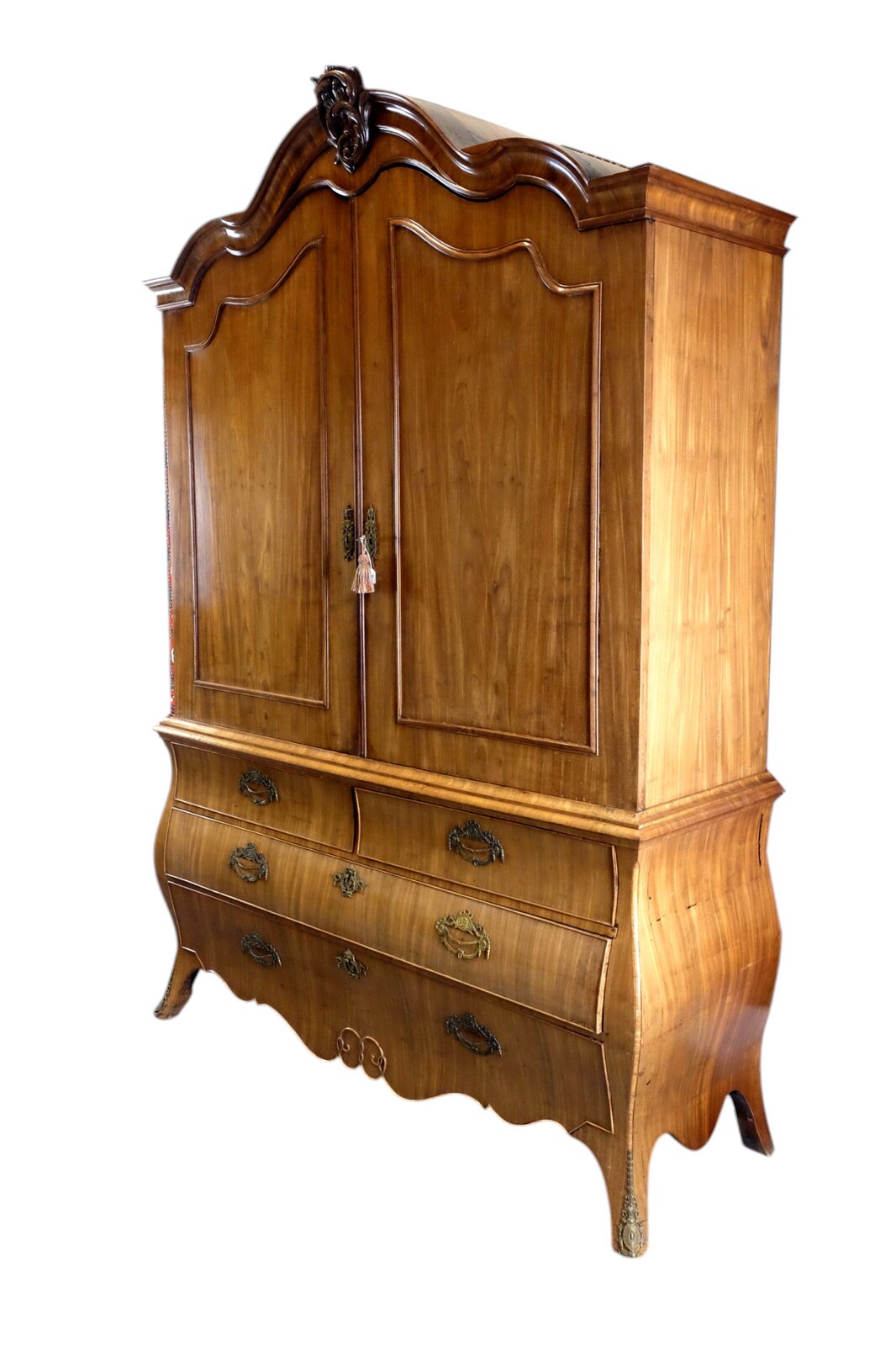
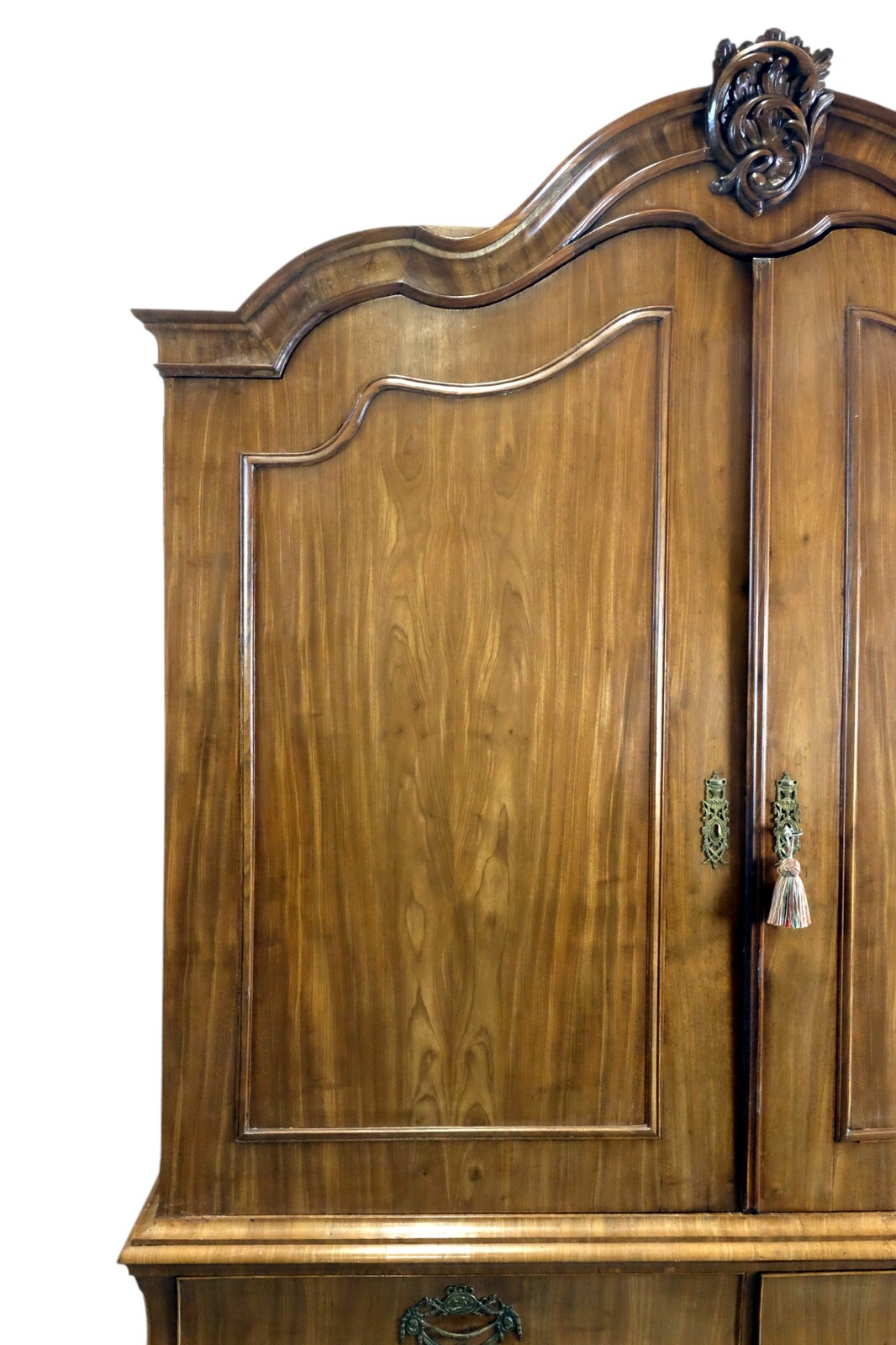
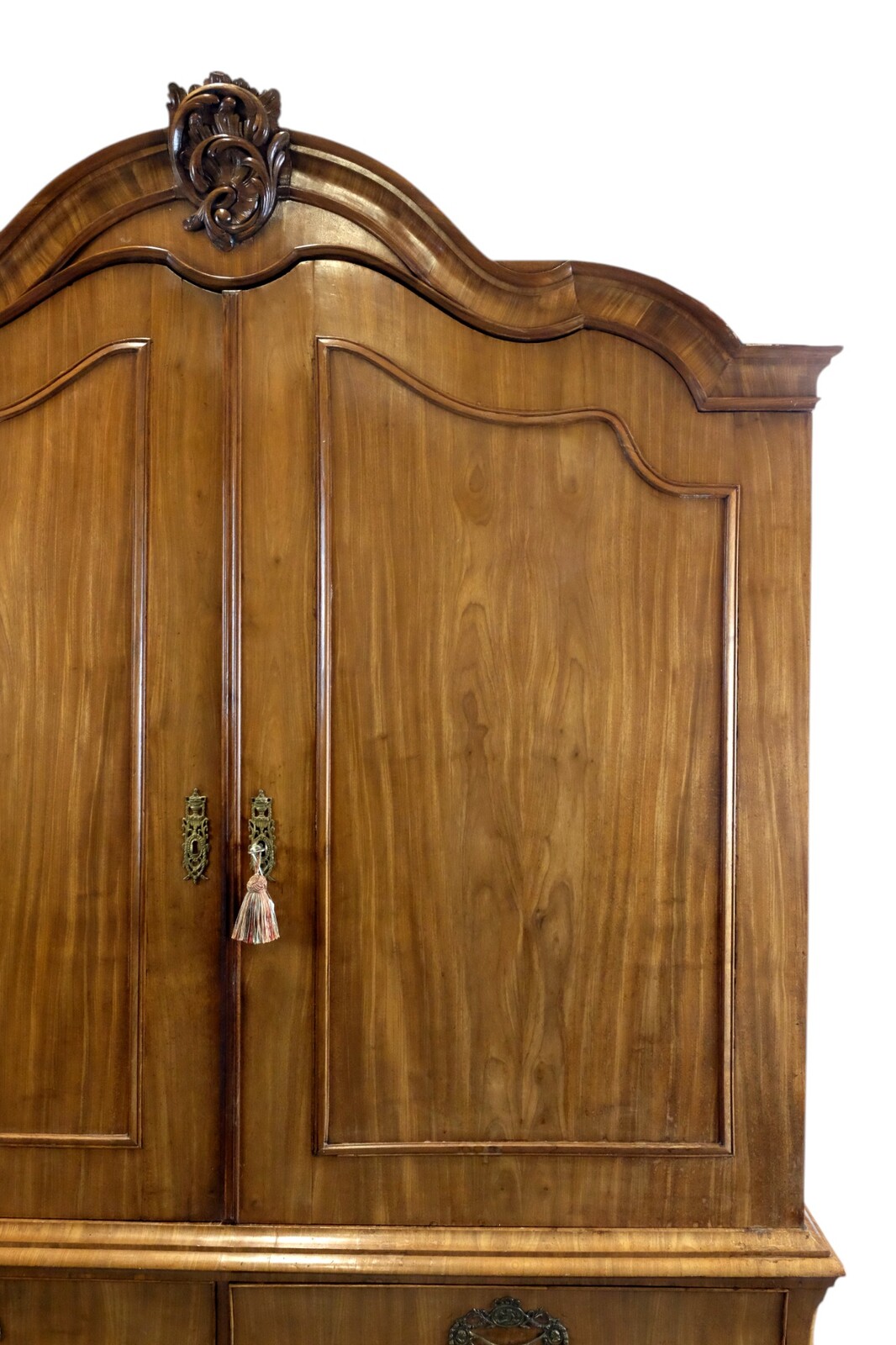
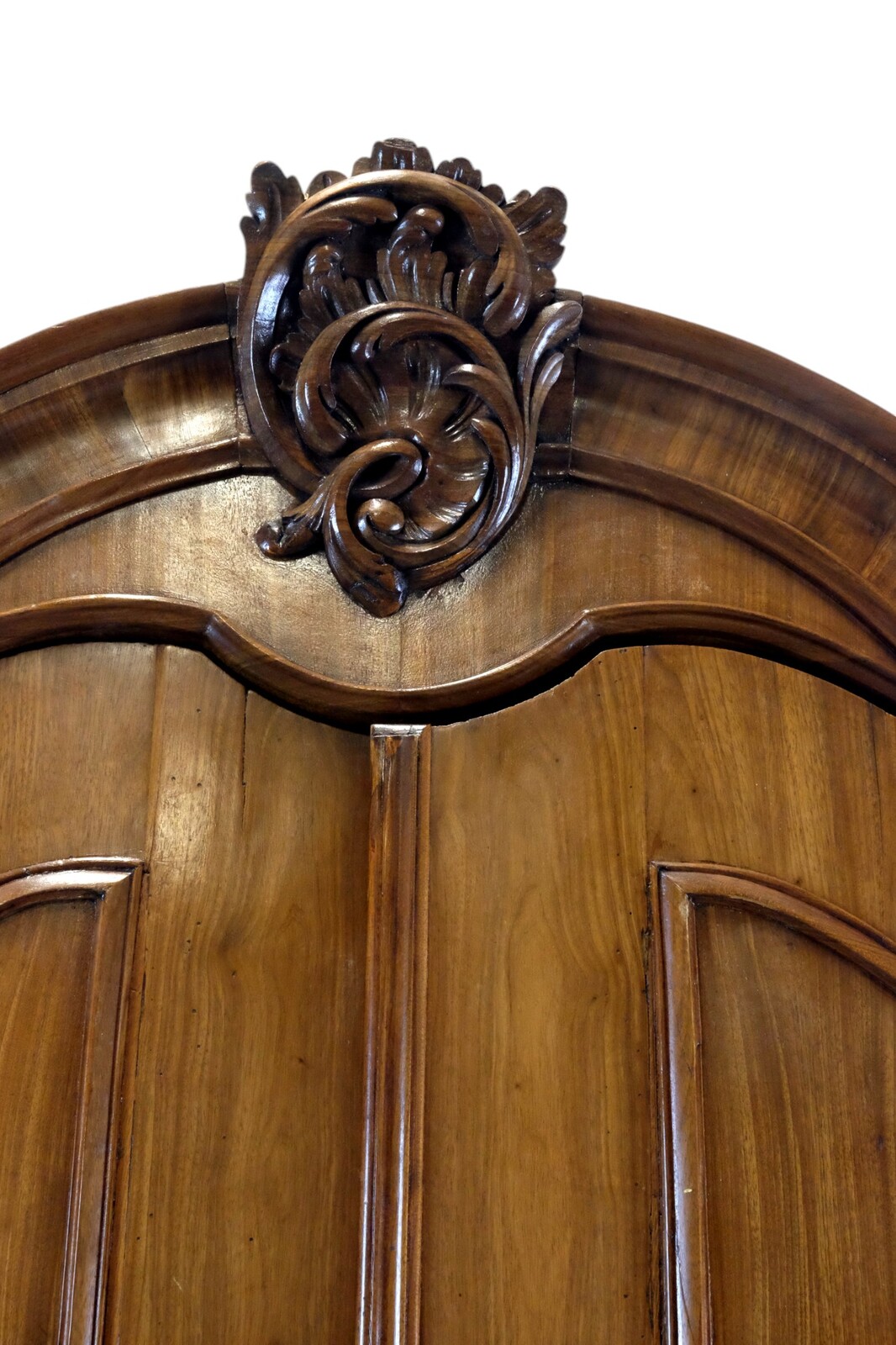
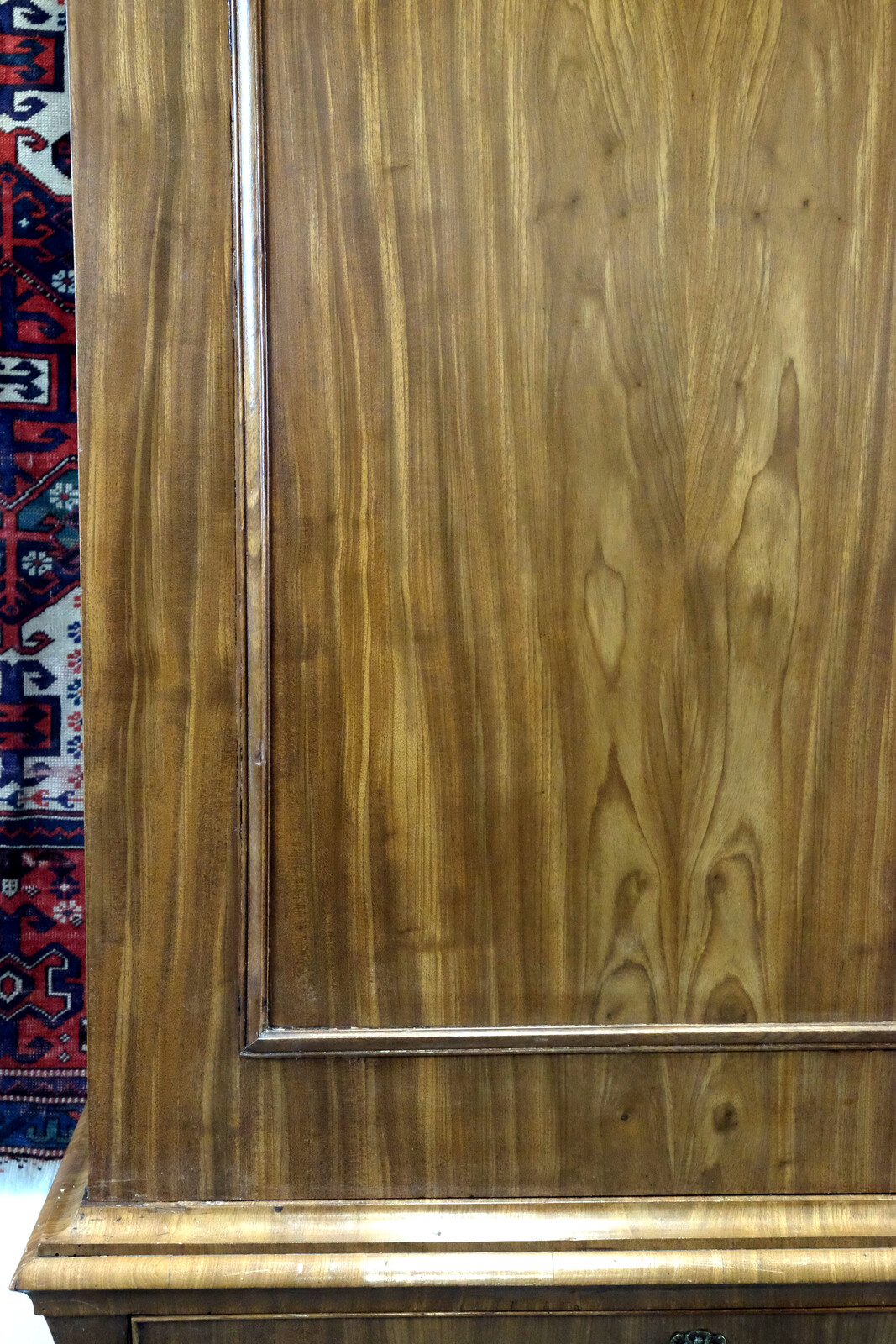
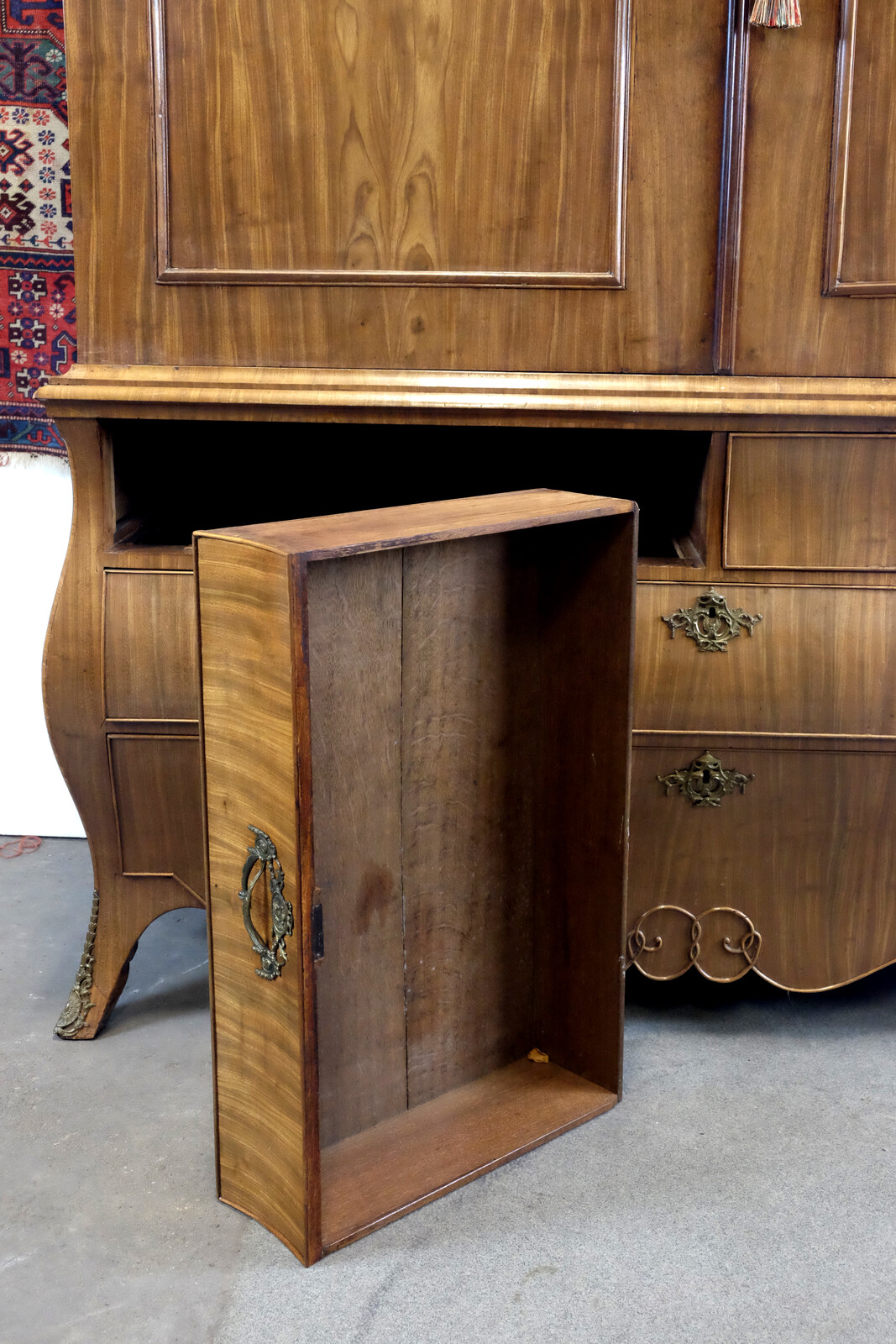
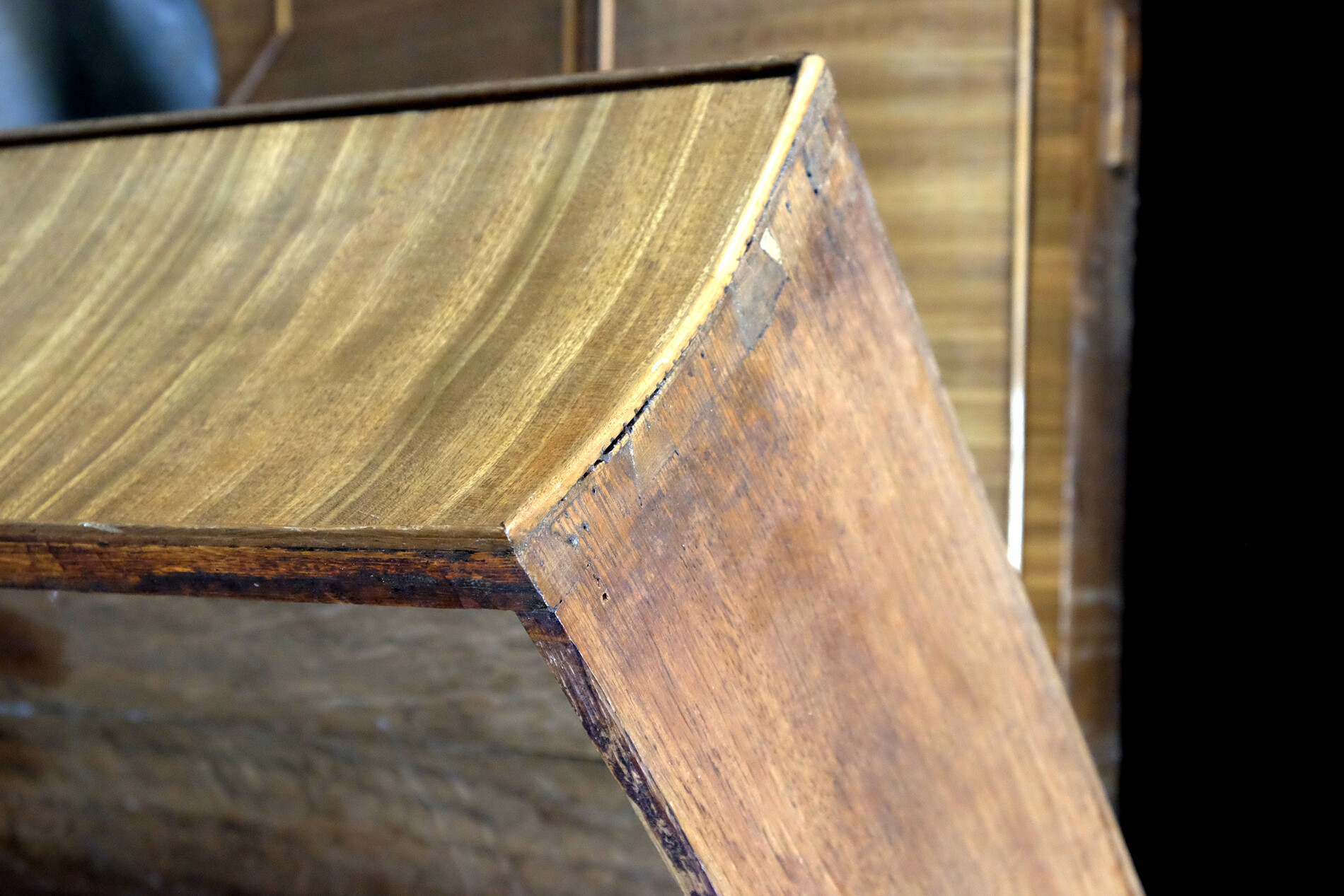
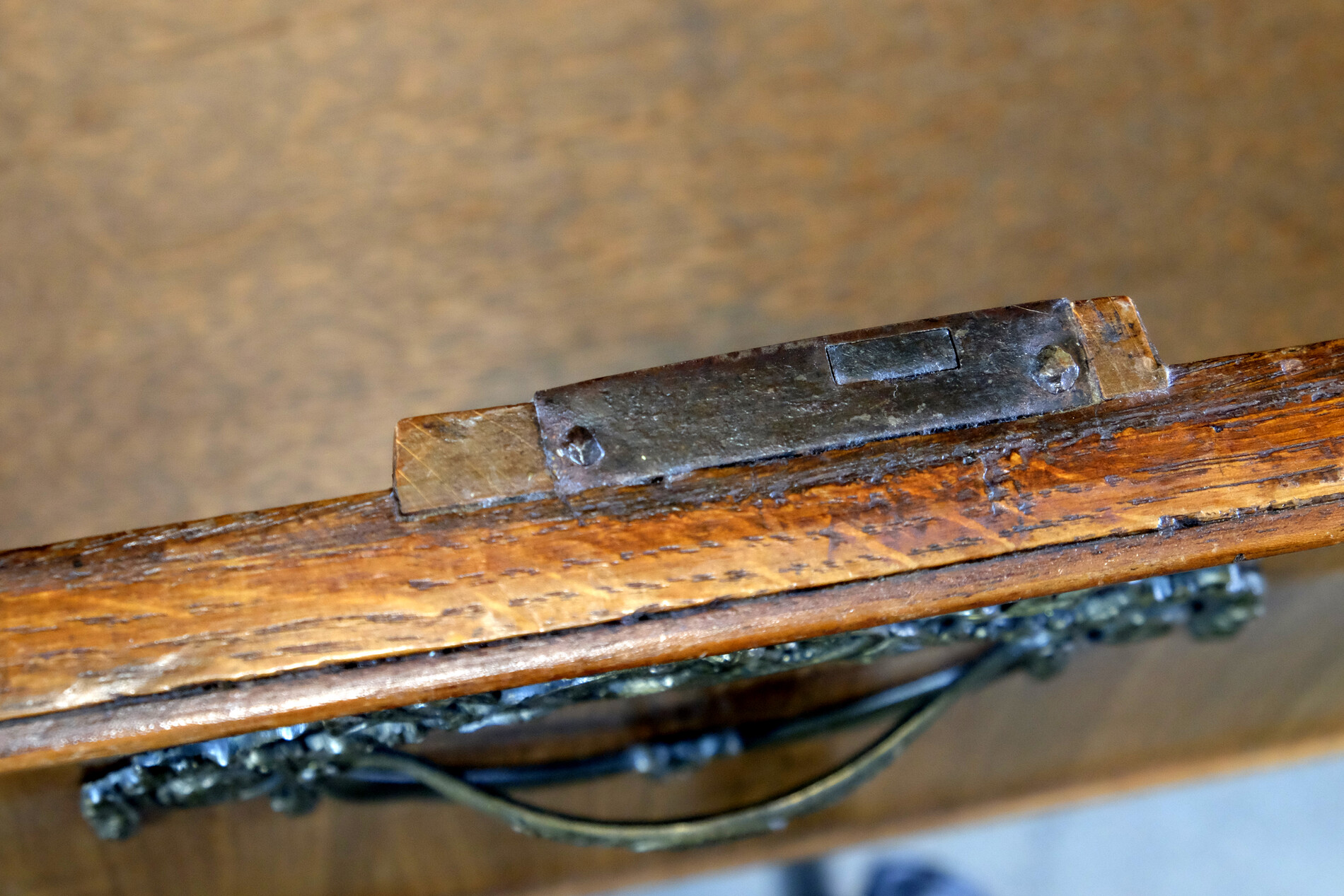
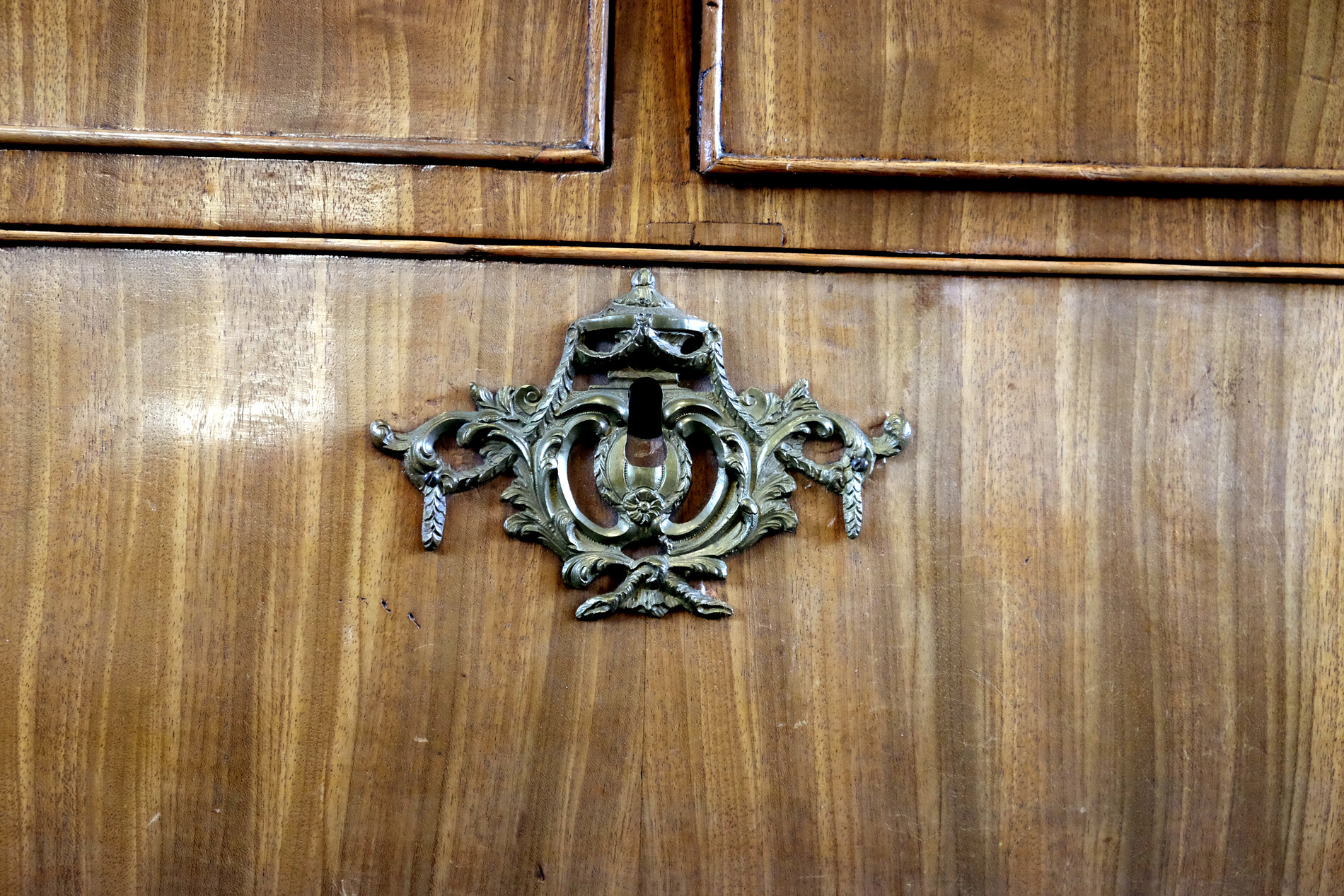
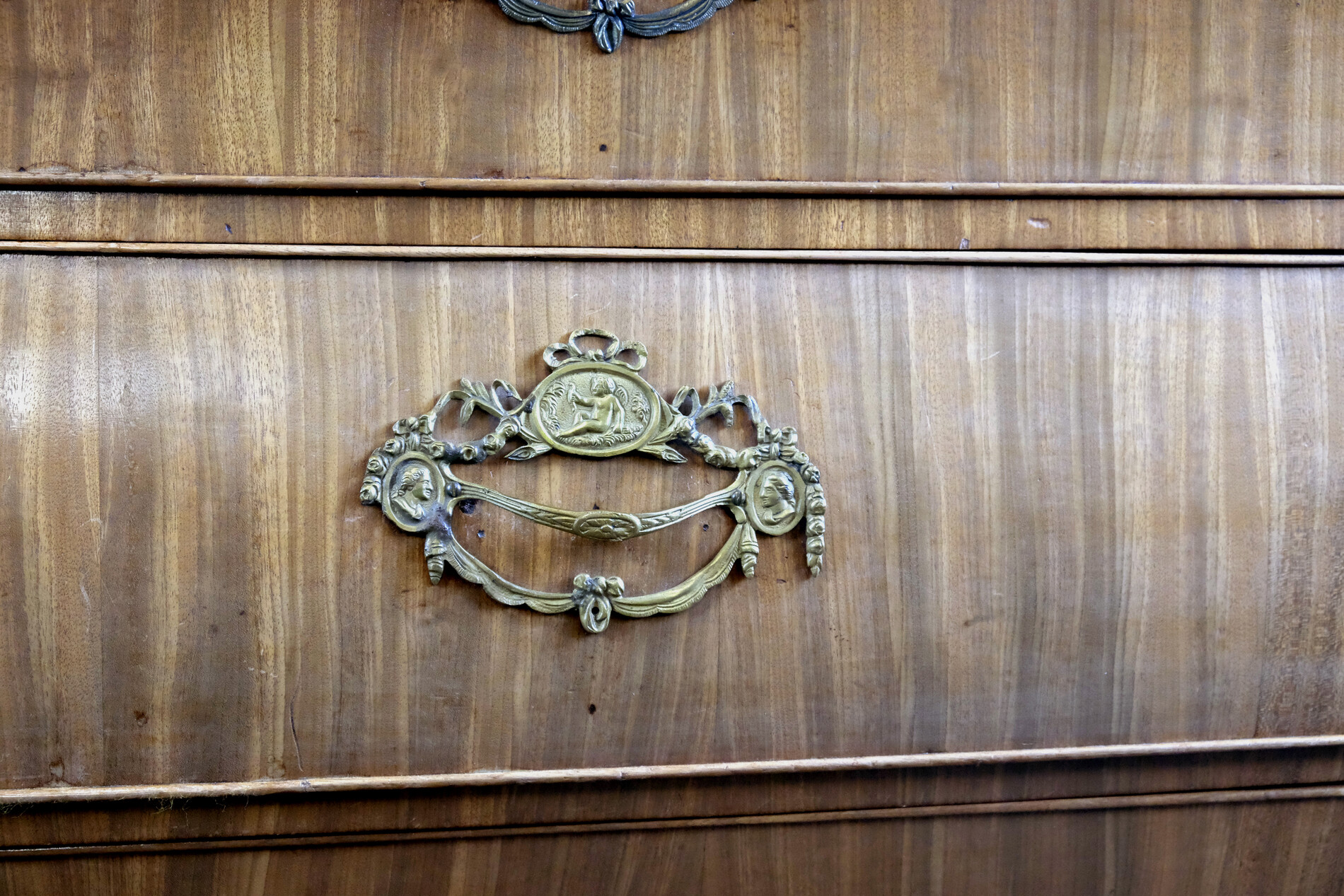
Elegant kabinet uitgevoerd in kostbaar mahonie hout. Prachtig meubelmakerswerk. De stijl is transitie, overgang van Lodewijk de 15de naar Lodewijk de 16de. Rond 1750. 'Enkel gebogen' onderkast, ook wel gebombeerd genoemd naar de ronde bolvorm van een bom uit die tijd. Ook de zijkant is gebogen. Deze kabinetten deden vroeger dienst om het linnengoed in te bewaren. Dat linnengoed was toen zeer kostbaar en ook een status symbool. Dit meubel was eveneens kostbaar en een statussymbool.   Zorgvuldig op de overeenkomst in de nerf geselecteerd mahonie. Hiervoor moest hout gebruikt worden wat uit dezelfde stam kwam en planken gezaagd van hout dat naast elkaar in de stam had gezeten zodat het 'spiegelt'.   De onderste lade loopt door tot aan de voetregel die één geheel vormt met de lade. Daardoor is die lade extra diep van voren. Alle lades zijn gemaakt met een front van Mahonie en fraai kwartiergezaagd eiken met kunstig gezwaluwstaarte verbindingen.   De kleur van het hout is in die 270 jaar langzaam lichter geworden waardoor het nu een extra mooi effect heeft. Boven in de kap een kunstzinnig gesneden ornament wat typerend is voor de periode. Fraai detail is ook te zien aan de poten voor, massief gegoten messing ornamenten. Speciaal voor deze kast op maat gemaakt! Originele sloten. De sleutel in de deuren werkt maar is later. Uitgebreid en praktisch interieur met veel lades en legplanken. Gemaakt van prachtige kwartiergezaagde eikenhouten panelen.   HxBxD 245 x 174 x 55 cm.         Elegant cabinet made of precious mahogany. Beautiful crafed. The style is transition; from Louis the 15th to Louis the 16th. Around 1750. 'Single curved' base cabinet, also called bombé after the round shape of a bomb from that time. The side is also curved. These cabinets used to serve to store linen. That linen was very valuable at the time and also a status symbol. This piece of furniture was also valuable and a status symbol.   Carefully selected mahogany to to acquire similarity in the grain. For this, wood had to be used from the same trunk and planks had to be sawn from wood next to each other in the trunk so that it 'mirrors'.   The bottom drawer extends to the foot rail, which forms one whole with the drawer. This makes the drawer extra deep at the front. Extra elegant.

Request for more information
See more items of this dealer
Print
Rob Schipper
Address:
Den Dubbelen 3 ,
5466 RL Veghel
Region: Noord-Brabant
Country: The-Netherlands
Tel.: +31 (0)6 20 86 63 32
E-mail: info@robschipper.com
Website: www.robschipper.com
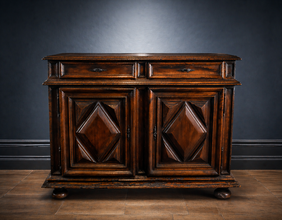
Italian Sideboard walnut 18th century

Italian Sideboard walnut 18th century

Beautiful North Italian buffet cabinet.

Walnut, with a beautiful old patina.

Like old leather.

This cabinet was made in the 18th century tradition, following the 17th-century tradition.

Around 1720.

Deep geometric diamond patterns on the doors and deep, beautifully crafted profiles throughout.

That is characteristic of that 17th-century Italian Baroque style.

The drawers are dovetailed.

There are old woodworm holes here and there – normal at this advanced age and for walnut.

No other problems whatsoever.

The lock is original and the key works.

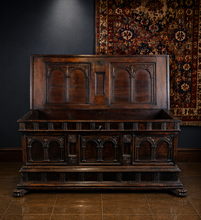
Italia Cassone walnut 18th century

Italia Cassone walnut 18th century

Stylish Italian Cassone.


A special surprise is the decoration on the underside of the lid – when opened, we see a beautifully crafted underside, allowing the chest to remain permanently open.


Original lock and key – see detail photo.


Beautifully decorated with triumphal arches – also on the sides.


Typical Italian feet, angled placed.


Beautiful dark patina.

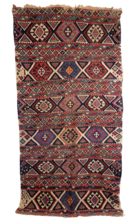
shahsevan Kelim

shahsevan Kelim

shahsevan Kelim, 19th century natural colors. please aSK 

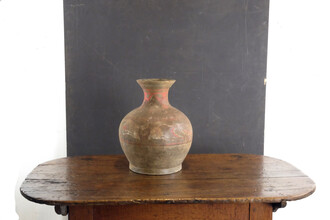
Han dynasty.

Han dynasty.


Han kruik groot

Titel:
Grote Han-dynastie kruik met polychrome verfdecoratie – 45 cm hoog – met voorstelling van een wit paard – 206 v.Chr. – 220 n.Chr.

Beschrijving:
Een indrukwekkende, grote terracotta kruik uit de Han-dynastie, met originele polychrome beschildering in rood, paars, groen en wit pigment. De kruik heeft een vloeiende, bolvormige buik, een lange, taps toelopende hals en een licht uitstaande mondrand. Een elegant silhouet dat typerend is voor grafkeramiek uit de vroege keizerlijke tijd.

De verfdecoratie is bijzonder rijk en dynamisch uitgevoerd met gestileerde wolk- en golfmotieven, evenals mythische wezens en dieren. Opvallend is de voorstelling van een wit paard met zwarte contourlijnen, zichtbaar op het onderste register van de buik. Dit motief is zeldzaam en mogelijk een verwijzing naar het beroemde “Hemelse Paard” (tianma), dat in de Han-tijd als een symbool van kracht, snelheid en status werd vereerd. Paarden speelden een cruciale rol in de militaire macht en het keizerlijke vervoer van het Han-rijk.

De verf is rechtstreeks op het oppervlak aangebracht zonder glazuur – een typisch kenmerk van Han-grafkeramiek. Ondanks ouderdom en begrafenissporen zijn veel kleuren nog goed zichtbaar. De aanwezigheid van decoratieve lijnen en patronen over de hele kruik maakt dit object uitzonderlijk aantrekkelijk voor verzamelaars van archaïsche Chinese kunst.

Afmetingen:
Hoogte: ca. 45 cm
Diameter: ca. 30 cm

Conditie:
Goede staat met ouderdoms- en gebruikssporen, inclusief slijtage van pigment en oppervlakkige krassen. Geen zichtbare breuken of restauraties. Originele verfdecoratie nog goed zichtbaar, met sporen van witte kalkafzetting, typisch voor grafvondsten.

Periode:
Han-dynastie (206 v.Chr. – 220 n.Chr.)

Herkomst:
Oude Europese collectie. Verkregen in de jaren 1980, vergezeld van verklaring van herkomst.

Bijzonderheden:

  • Zeldzame voorstelling van een wit paard

  • Originele beschildering met natuurlijke pigmenten

  • Uitstekend voorbeeld van Han-grafkeramiek

  • Esthetisch en historisch waardevol object


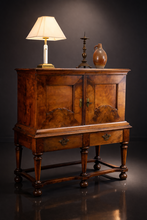
William & Mary Dutch Table Cabinet

William & Mary Dutch Table Cabinet

Table Cabinet from the William and Mary period – 1680-1710.


(William III of Orange (1650-1702) and Mary II Stuart (1662-1694) were a powerful couple who ruled over the Dutch Republic and later England, Scotland, and Ireland. They married in 1677, after which William became King of England in 1689 following the Glorious Revolution. Together they built Het Loo Palace.)


During this period, we see a clear blending of English and Dutch elements in furniture line-height: 100%; margin-bottom: 0cm"> 

Actually not blended, but the Dutch briefly became English during this time.


A beautiful and powerful form is the heavy rail at the bottom of the doors - it gives the cabinet an extra robust appearance.


Beautiful line-height: 100%; margin-bottom: 0cm"> 

Note also the elegant octagonal legs.

Very beautiful walnut has been used and has acquired a beautiful color.


Interior: oak.


Two drawers underneath. The key is original and works.


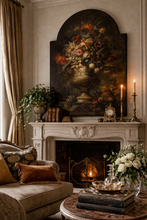
Flower still life, oil on canvas

Flower still life, oil on canvas


Belgian or French studio, 19th century


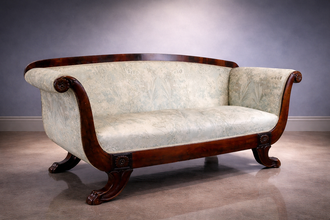
sofa Bierermeier

sofa Bierermeier

Elegant Biedermeier sofa (1815-1850)


Beautiful and skillful carving, see detail photos.


The sofa has recently been reupholstered very professionally with a beautiful upholstery fabric with a very light green vegetable dye.


This reupholstering is never cheap.


See also the details - the edges are finished with fine piping.


The front and back are presentable.


It is very comfortable to sit in, 

>>>>>>>>>>>>>>>>>>>>>>>>>>>>>>>>>>>>>>>>>>>>>>>

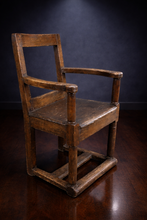
early french chair 1580-1620 oak

early french chair 1580-1620 oak

Beautiful early French chair.

French regional armchair, late Renaissance / early 17th century (Lorraine style)
Northeast France

1580 - 1620 (traditions lingered longer in the countryside)

The curved armrests are identical to the famous French caquetoire.

The turned stiles at the front are also typical of this period.

This is a regional version, and the open back is strongly reminiscent of chairs in Lorraine.

Early mortise and tenon joints.

Very heavy foot rails – this certainly contributes to the stability and the fact that the chair has been preserved. >400 years!

Beautiful patina.
Heavy oak.

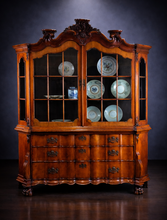
French Display Cabinet   1750

French Display Cabinet 1750

French display cabinet from the mid-18th century.

Louis XV period,

Around 1750.

Old original glass in the doors.

Clear Rococo style - see the beautiful hood with that typical Rococo stitching.

Deeply detailed carving. See detail photos.

Asymmetrical in shape, so-called rocaille form.

Based on the whimsical shapes of oysters.

These cabinets served to display porcelain.

Both the cabinet and the porcelain were status symbols at the time.

Beautiful weathered color in the wood.

The lower cabinet has three drawers.

These drawers have a so-called organ-curved profile.

The interior is made of dark oak.

The upper cabinet can be separated from the lower cabinet, and the hood is separate from the upper cabinet.

The furniture is shipped in this configuration.

I only ship to countries within the EU.
Buyers from other countries must arrange their own transport. They also pay for the customs costs themselves.

I can advise you. You place the order, I pack as your carrier requires, and you send me a label from your carrier.>>>>>>>>>>>>>>>>>>>>>>>>>>>>>>>>>>>>>>>>>>>>>>>>>

SOLD
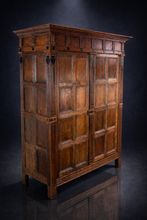
fine 17th century Dutch Panel Cabinet

SOLD

fine 17th century Dutch Panel Cabinet

Rare and unique panel cabinet.

Early, first half of the 17th century, 1610-1630.
These cabinets are always quite understated; the panels are the decoration.
Beautiful panels, quarter-sawn, so we can see those characteristic leopard spots in the wood.

It's also very beautiful that the pilasters on the corners wrap around the corner and extend to the side, creating a sculptural element.
Refined profiling in the rails and stiles.
Very beautiful in the pleats. A weathered patina.

Inside, three shelves. The middle one was later modified and fitted with two oak drawers.
Continuous stiles—older than the ball feet.

The lock is original, with a working key. The footer features beautiful carvings of "counted money."

Little restoration; the four legs are all damaged by a piece of about 25 cm.

I only ship to countries within the EU.
Buyers outside the EU must arrange their own transport.
I pack according to your carrier's instructions, on a pallet.
You order a label, and I'll attach it.

I'll advise you on which carrier you prefer.

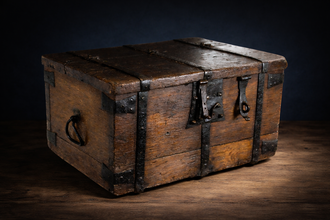
Gothic chest

Gothic chest

Late Gothic chest, very heavy oak, 35 mm thick, with wrought iron bands all around.
For storing money and valuable documents – two locks were required to open it, so two people, each with a key, were needed.
Typical of a money chest.

This chest was made purely for practical use, for example, for a municipality, guild, or monastery.

Beautiful and deep patina.

The lock plate is typically Gothic.

circa 1580-1620.

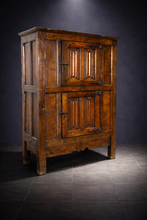
Early Gothic Spanish Cabinet

Early Gothic Spanish Cabinet

Stunning and typically Spanish cabinet.

Early cabinet with letter panels in the doors.

Heavy uprights and an early, small hood.

You are looking at a Spanish cabinet from the 16th or, at the latest, the early 17th century.


Special wood: Azina azina / encina (Quercus ilex), a type of oak not found in Northern Europe.

These trees can withstand drought and heat and therefore grow very slowly.

They can live for 1,000 years.

The wood is also very tough; Spaniards used it to make wagon axles, millstones, wooden screws, or chopping blocks.

It is also heavier than regular oak.

The wood for this cabinet could well have been 500 years old when it was made.


The difference in construction between this Spanish cabinet and, for example, Dutch or Flemish is striking – the Spanish are much more spontaneous.

Less striving for perfection. More wabi-sabi.


The hinges are forged and original.


The wood has a beautiful, weathered patina.


The last photo shows a panel of the back.

You can see shrinkage cracks not only along the grain but also across it.

We see these cracks when the wood is older than the 17th century.

And you rarely see them.


I only ship to countries within the EU.

Buyers from other countries must arrange their own transport, for example, through FedEx or DHL. I can advise you.

I pack according to your wishes. You send me a label by email, and I will then give it to your carrier. >>>>>>>>>>>>>>>>>>>>>>>>>>>>>>>>>>>>>>>>>>>>>>>>>>>>>>>>>